


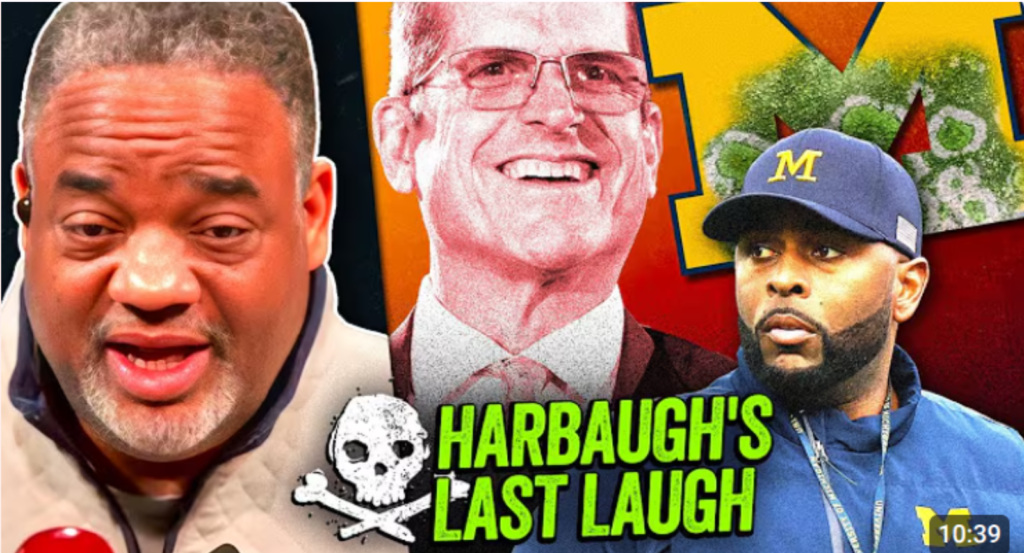
In the high-stakes theater of Big Ten football, success is rarely an accident. It is the result of a deliberate “operating system”—a combination of seasoned leadership and hard-earned merit. As we look at the landscape in late 2025, the contrast between Indiana’s Curt Cignetti and Michigan’s Sherrone Moore isn’t just a difference in win-loss columns; it is a case study in the danger of “proximity to greatness” versus the power of proven experience.
When Sherrone Moore was handed the keys to the Michigan kingdom on January 26, 2024, the narrative was one of continuity. He was the hand-picked successor to Jim Harbaugh, a man who had just delivered a national title. But as Colin Cowherd warned at the time, “proximity to genius does not equal genius.”
Moore’s ascent was meteoric, rising from a tight ends coach in 2018 to the head of the winningest program in college football in just six years. While he shared the “glow” of Harbaugh’s success, the transition into the top spot has been anything but smooth. Now, with Moore facing serious legal charges—including felony third-degree home invasion and stalking—the “cracks” Cowherd predicted haven’t just appeared; the entire foundation has crumbled.
Michigan is a meritocracy that forgot to check the credentials of its own succession plan.
Compare that to the man currently leading the No. 1 seed Indiana Hoosiers: Curt Cignetti. Cignetti didn’t just inherit a “Giga-factory” of talent; he built his own. His journey didn’t involve standing in the shadow of a legend—it involved winning at every stop. From Indiana University of Pennsylvania to Elon University to James Madison, Cignetti’s mantra was simple and efficient: “I win. Google me.”
While Moore was navigating the complex social masonry of the Michigan staff—a staff now marred by the federal charges against Matt Weiss and the lingering shadow of Connor Stalions—Cignetti was focused on the cold, logistical reality of winning football games. Cignetti’s rise was built on decades of play-calling and program-building. Moore’s was built on being the “next man up” in a room full of giants.
Even Jim Harbaugh, currently leading the Chargers, seems to be “still processing” the sudden unraveling of his protege. The “boa constrictor” defense that Moore inherited—the one Mike Macdonald built and Jesse Minter perfected—has lost its grip.
In the end, the V.I. Free Press values the best player on the field. Curt Cignetti was a “good idea” because he was a proven commodity. Sherrone Moore was an experiment in continuity that lacked the seasoned constitution required for the job.
As Indiana prepares for its run at a national title and Moore prepares for a Washtenaw County courtroom, the lesson for athletic directors is clear: don’t mistake the reflection of greatness for the source of it.


