



Lanzhou, an industrial city in northwestern China, is prone to air pollution due to its unique valley basin topography.
The incidence of otolaryngologic diseases is closely related to the air quality.
Based on air-quality data and outpatient data from an otolaryngology clinic within a hospital in Lanzhou during 2014‒2022, we analyzed the statistical relationships between the concentrations of six common air pollutants and the number of outpatient visits for common otolaryngologic inflammatory diseases using a generalized additive model.
We used the results to discuss the potential role of urban airborne pollen in contributing to allergic rhinitis, and we also examined the variability of the relationship between air pollutants and otolaryngologic diseases under anthropogenic interventions using periods before and during the COVID-19 outbreak.
Rising concentrations of CO, NO2, PM2.5, PM10, and SO2 in Lanzhou led to an increase in the number of outpatient visits for otolaryngologic inflammatory diseases, and the impact patterns were different for different genders and different diseases.
In terms of gender, CO, NO2, and SO2 had a significantly greater impact on the number of visits for otolaryngologic inflammatory disease for males than for females, while PM2.5 and PM10 had a more significant impact on the female population.
The number of outpatient visits for acute otitis media and allergic rhinitis also increased with increasing concentrations of the above five pollutants, while airborne pollen was an important trigger for high incidences of allergic rhinitis in July and August.
In addition, during the period of lockdown and control due to the COVID-19 pandemic, there was a decrease in the relative risk of the five aforementioned pollutants with respect to the occurrence of inflammatory otolaryngologic disorders.
The effect of these pollutants on such disorders was reduced compared with that observed during the pre-pandemic period, indicating that effective air pollution control is an important measure that can be implemented to reduce the occurrence of otolaryngologic inflammatory diseases and protect residents.
This study reveals the occurrence pattern of otolaryngologic diseases and their relationships with air pollutants in Lanzhou, which is important for the prevention of otolaryngologic diseases and the formulation of air pollution control strategies.
Introduction
With the rapid increase in urbanization and industrialization, various anthropogenic activities are increasingly exacerbating the deterioration of our living environment1,2. Among many environmental issues, the quality of the atmospheric environment has attracted much attention because it is closely related to human health. The World Health Organization (WHO) reported in 2022 that almost 99% of the global population currently breathes air that exceeds WHO air-quality limits. The human respiratory system has the most direct and extensive contact with the atmospheric environment and is more susceptible to the effects of atmospheric pollutants than other systems in the body, resulting in a close relationship between air pollutants and the occurrence of respiratory diseases3,4. When air pollutants enter the respiratory system, they can cause inflammatory responses, oxidative stress, and immune dysfunction, which can lead to the development of respiratory diseases5,6,7. The impact of atmospheric conditions on human respiratory diseases has become a research hotspot in the field of environmental health8,9.
Lanzhou, the capital city of Gansu Province and an important river-valley industrial city in northwest China, was previously one of the most polluted areas in China. Owing to the high frequency of counter-temperature static wind weather caused by the unique river-valley topography, the exhaust gases emitted by industry, heating, and other human activities are poorly diffused in Lanzhou10. Several studies have been conducted on atmospheric pollution and respiratory diseases in Lanzhou. Jin et al. assessed the effects of six air pollutants on total hospitalizations for respiratory diseases in Lanzhou; they found that PM2.5, PM10, NO2, and CO were positively correlated with daily hospitalizations for respiratory diseases11. Sun et al. analyzed the effects of different seasonal PM10 concentrations on respiratory diseases in Lanzhou; they found that a seasonal increase in PM10 concentrations led to an increase in the number of hospitalizations for respiratory diseases, especially for women12. Such studies have confirmed that air pollutants lead to an increase in the number of hospitalizations and outpatient visits for respiratory diseases in Lanzhou, and that they affect people of different genders and ages to varying extents. However, these studies only focused on the effects of common atmospheric pollutants on respiratory diseases; however, other components of the atmospheric environment, such as airborne pollen, may also represent a threat to respiratory health. In addition, in their selection of disease indicators, most studies have focused on overall respiratory diseases or lower respiratory tract diseases, while relatively few studies have examined the occurrence of upper respiratory tract and/or otolaryngologic diseases.
During the COVID-19 pandemic, Lanzhou implemented lockdown and control procedures and other measures, which resulted in the near cessation of industrial production, hospital operations, and other activities. Concentrations of air pollutants and hospitalizations for otolaryngologic diseases were affected, and their relationship was also likely altered. However, there is a lack of comparative analysis to explore such relationships before and during the COVID-19 outbreak. Such comparative analysis may help to reveal the positive impact of containment and control measures on air quality and human health, and it may also contribute to atmospheric environmental management and the prevention and diagnosis of otolaryngologic diseases. Therefore, it is important to study the impact of atmospheric environmental conditions on otolaryngologic diseases in Lanzhou and elsewhere, and to conduct a comparative analysis before and during the pandemic.
In this study, we obtained atmospheric environmental data for Lanzhou, along with otolaryngology outpatient data from a hospital during 2014‒2022, and analyzed changes in atmospheric environmental elements and the incidence of otolaryngologic diseases. We used a generalized additive model (GAM) to quantitatively reveal the correlations between the concentrations of six air pollutants (CO, NO2, O3, PM2.5, PM10, and SO2) and the number of outpatient visits for common otolaryngologic diseases, and we then analyzed these in subgroups according to gender. In addition, we specifically considered the impact of urban airborne pollen on otolaryngologic diseases. We integrated historical airborne pollen data to explore the potential association between pollen seasonality and the incidence of allergic rhinitis. By analyzing the associations between atmospheric pollutants and otolaryngologic diseases before and during the COVID-19 outbreak, we provide a valuable perspective on the environmental and public health impact of COVID-19.
Study area and data
Geographical background of the study area
Lanzhou is located in the upstream area of the Yellow River and is a mountainous and valley-type city (Fig. 1). Lanzhou is also located in the transition zone between the modern monsoon and non-monsoon climate domains, with a climate typical of the temperate semi-arid climate zone13. Lanzhou borders the Tengger Desert and the Badain Jaran Desert. The western part of Lanzhou is located in the Qaidam Basin, which is an important dust source area in Asia; hence, the air quality in Lanzhou is often affected by sand and dust. Lanzhou has stable atmospheric stratification and a high frequency of calm conditions, which are inconducive to the dispersion of air pollutants14. The vegetation in Lanzhou mainly consists of temperate grassland, dominated by herbs15.

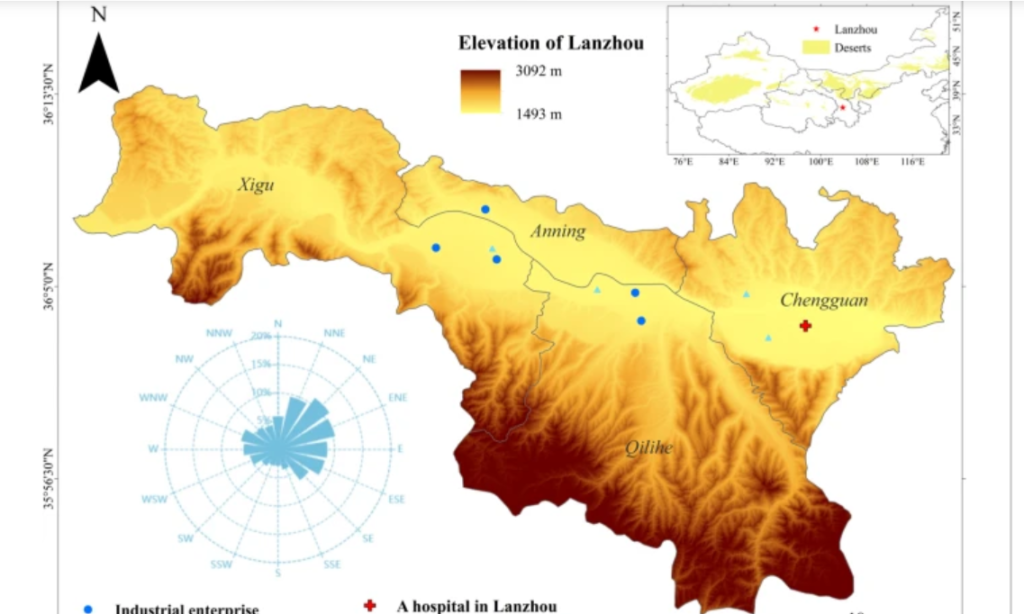
As the provincial capital of Gansu, Lanzhou is a major political and economic center of northwest China. Lanzhou has a high proportion of secondary industry. The development of industry plays a key role in economic growth, but the increase in air pollutant emissions during industrial production has a negative impact on air quality.
Data
The data used in this study mainly include air pollution, meteorological, and disease data for Lanzhou.
Air pollution data
We obtained daily CO, NO2, O3, PM2.5, PM10, and SO2 concentration data for Lanzhou for the period of 2014‒2022. These data were obtained from the China Air Quality Online Monitoring and Analysis Platform (https://www.cnemc.cn). Air pollutant concentrations in Lanzhou are represented by the average of data from four air-quality monitoring stations located in the urban area. The locations of these four air-quality monitoring stations cover the main areas of Lanzhou (Fig. 1); hence, their monitoring data well reflect the actual air pollution in Lanzhou16.
Meteorological data
Meteorological data were obtained from the China Weather Information Center, and included average daily temperature (℃), average daily relative humidity (%), average daily barometric pressure (hPa), and average daily wind speed (m/s) for the period of 2014‒2022.
Disease data
Disease data were obtained from the outpatient otolaryngology statistics of a hospital in Lanzhou; the outpatient data included information such as gender, age, date of outpatient visit, and the principal diagnosis. The hospital is one of the largest tertiary Grade A general hospitals and otolaryngology specialty centers in Lanzhou, with its outpatient services covering the city’s main urban areas and surrounding regions. Hence, it is well representative of the broad population and the region. All diagnoses were standardized using the International Classification of Diseases, 10th Revision (ICD-10) codes. Patients with a primary diagnosis of acute inflammatory diseases affecting the ear, nose, or throat were selected for this study. The diagnostic codes included: Acute nasopharyngitis (J00), Acute sinusitis (J01), Acute pharyngitis/tonsillitis (J02/J03), and Acute laryngitis (J04). To facilitate comprehensive analysis, these conditions were classified as “Otorhinolaryngological Inflammatory Diseases.” Additionally, we separately analyzed two common disorders susceptible to external environmental influences: Allergic rhinitis (J30) and Acute otitis media (H65.0; H65.1; H66.0). Patients were excluded if they met any of the following criteria: (1) diagnoses unrelated to acute inflammation (e.g., trauma, tumors, polyps); (2) symptoms secondary to systemic diseases (e.g., autoimmune disorders, immunodeficiency); (3) incomplete medical records (e.g., missing gender, age, or specific diagnosis); (4) residence outside Lanzhou. The application of these criteria ensured data homogeneity and reliability.
We analyzed anonymized outpatient records during 2014‒2022, comprising ~ 110,000 visits for otolaryngologic conditions. Female patients accounted for 51% of visits, with a consistent gender ratio across years. All patient identifiers (e.g., names, IDs) were removed prior to analysis, and no personal information was accessed or analyzed. Because of the impact of the COVID-19 pandemic, the outpatient disease data and air pollution data from 2020 to 2022 are anomalous. Hence, we chose data from 2014 to 2019 as the main target of analysis. We also analyzed differences in the relationships between atmospheric conditions and diseases before (2014‒2019) and during (2020‒2022) the COVID-19 pandemic.
Results
Changes in air pollutant concentrations during 2014‒2022
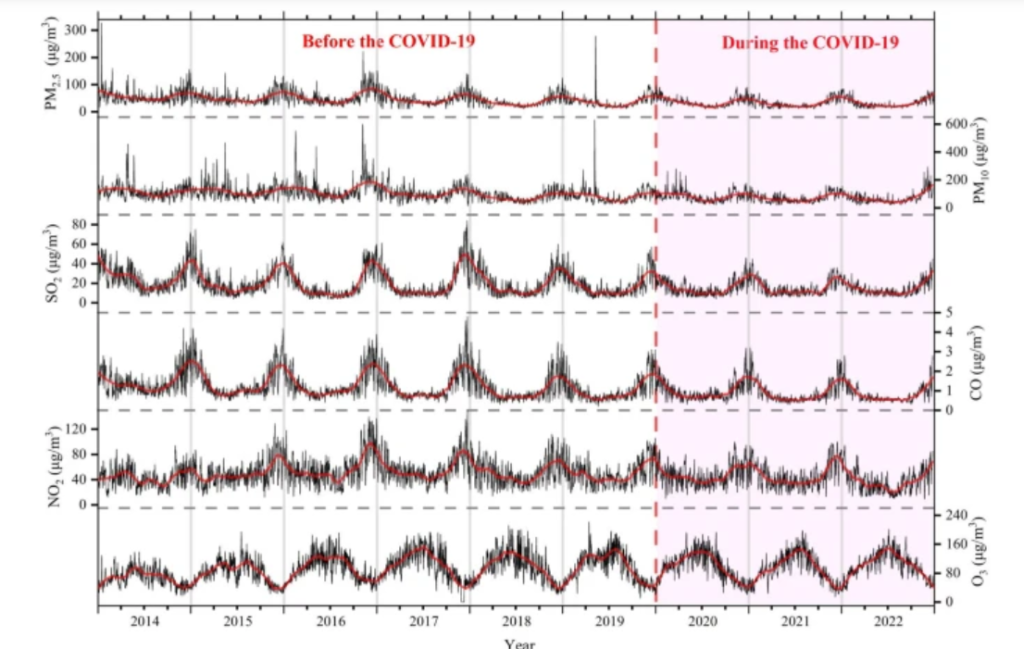
As shown in Fig. 2, during the period of 2014‒2022, changes in air pollutant concentrations showed a markedly seasonal pattern. Both before and during the COVID-19 pandemic, the concentrations of five pollutants (PM2.5, PM10, SO2, CO, and NO2) had a U-shaped distribution in each year. In addition, during the COVID-19 pandemic (2020‒2022), the peak concentrations of these five pollutants were substantially reduced when compared with their values during the pre-pandemic period. Furthermore, over a long-term scale, the overall concentrations of these five pollutants showed marked reductions (see Supplementary Table S1).
Fig. 2

Changes in outpatient visits for otolaryngological diseases and differences in outpatient visits by gender during 2014‒2022
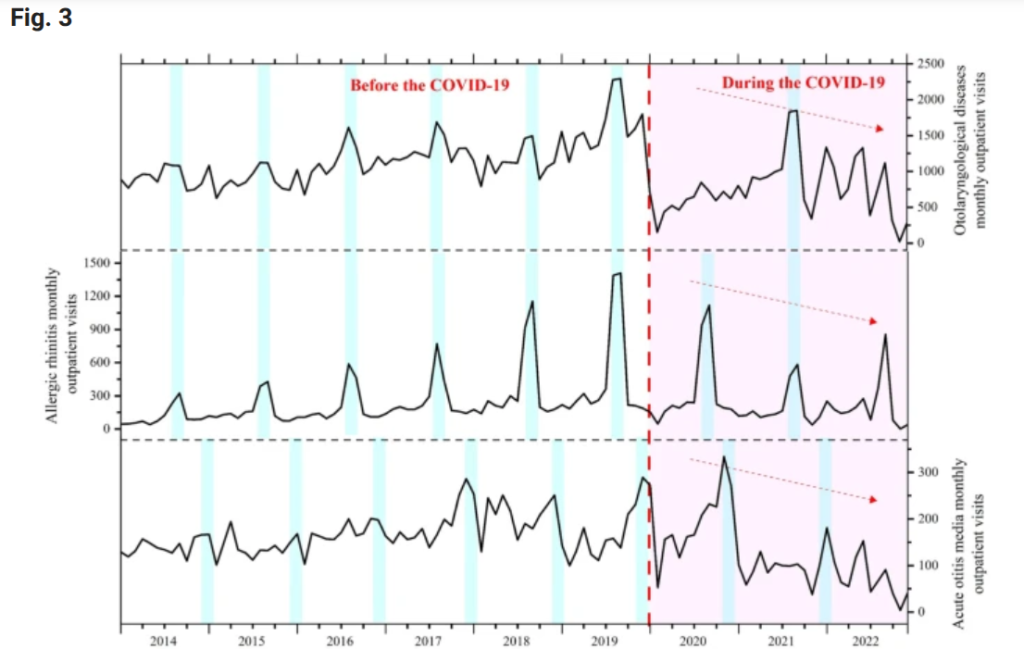
From 2014 to 2019, the total number of outpatient visits for otolaryngologic inflammatory diseases, as well as those for allergic rhinitis and acute otitis media, showed clear trends of annual increase. However, during the COVID-19 pandemic period, spanning 2020‒2022, the number of outpatient visits for each of these diseases decreased markedly compared with those in the pre-pandemic period (Fig. 3; see Supplementary Table S2). Changes in the number of visits for otolaryngologic inflammatory diseases were evidently seasonal. Although there was an overall decrease in the number of outpatient visits for allergic rhinitis, acute otitis media, and otolaryngologic inflammatory diseases in the studied hospital during the pandemic, the seasonal patterns of these outpatient visits did not change.
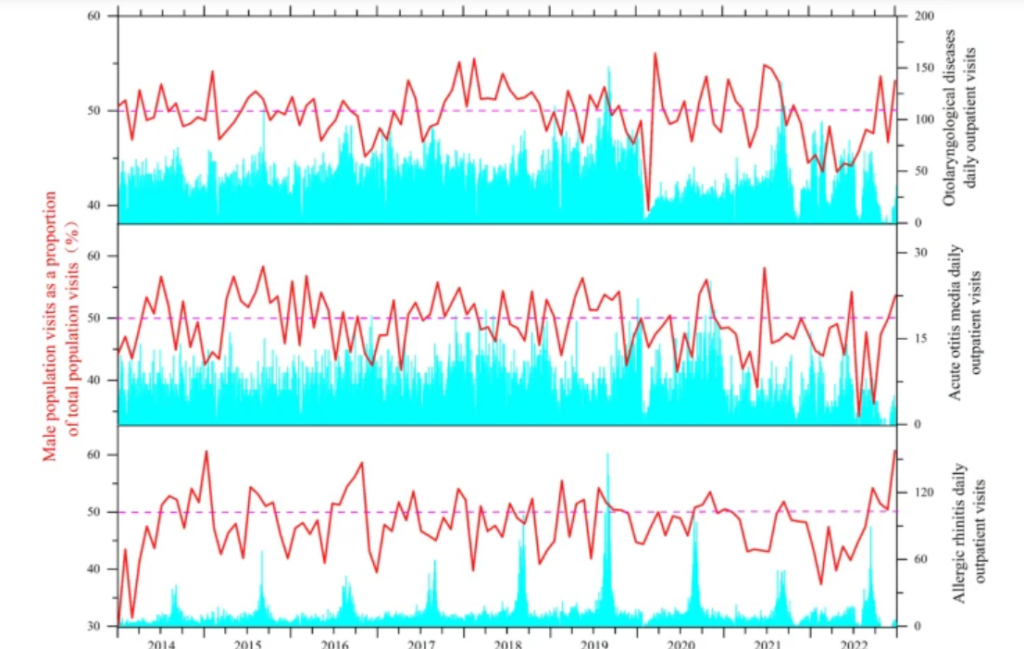
As shown in Fig. 4, the overall trend and seasonal characteristics of daily outpatient visits for otolaryngologic diseases between 2014 and 2022 were consistent with the monthly outpatient visits. For each of these three diseases, the number of outpatient visits for the female population was slightly higher than that for the male population.
Fig. 4
Impact of air pollutants on total otolaryngologic inflammatory disease outpatient visits
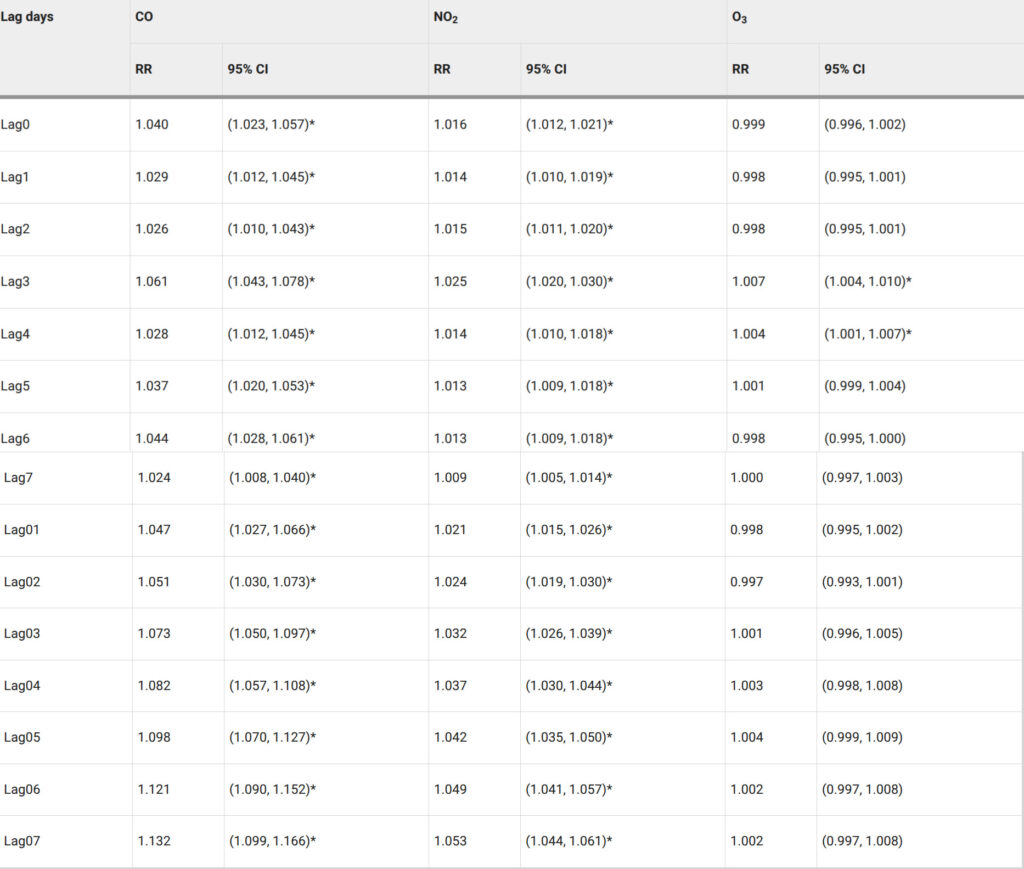
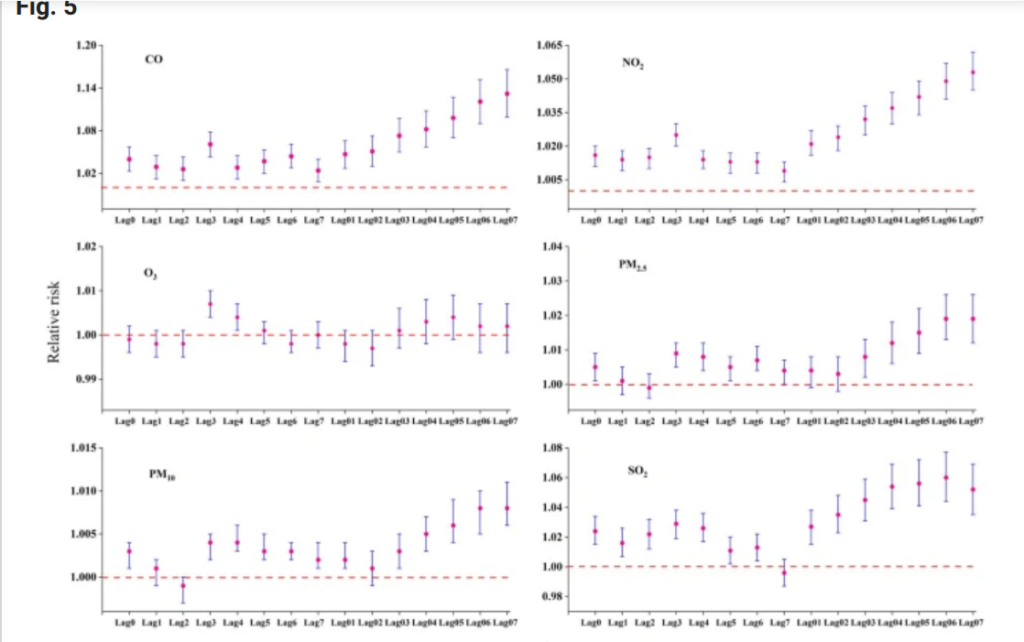
The results of our GAM analysis showed that, in addition to O3, the concentrations of CO, NO2, PM2.5, PM10, and SO2 each had a significant effect on the number of outpatient visits for common otolaryngologic inflammatory diseases. The RR values of the effect of each pollutant on the number of outpatient visits for otolaryngologic inflammatory diseases were different, and there were lag effects (Table 1). Comparison of the RR values under all single and cumulative lag days, CO, NO2, PM2.5, and PM10 shows that the largest RR values for disease were on the 7th day of cumulative lag, and that SO2 had the largest RR value for disease on the 6th day of cumulative lag (Fig. 5). Under the largest lag effect, the number of outpatient clinic visits increased by 13.2% (RR = 1.132) for a 1 mg/m3 increase in CO concentration. For a 10 μg/m3 increase in the concentrations of NO2, PM2.5, PM10, and SO2, the number of outpatient clinic visits increased by 5.3% (RR = 1.053), 1.9% (RR = 1.019), 0.8% (RR = 1.008), and 6% (RR = 1.060), respectively, all of which were statistically significant (P < 0.01).
Table 1 Influence and lagged effect of air pollutants on otolaryngologic inflammatory diseases in Lanzhou during 2014‒2019.


Impact of air pollutants on the number of outpatient visits for otolaryngologic inflammatory diseases in different gender groups and different types
Based on our analysis of the lag effect of air pollutants on diseases in the total population, the lag time having the greatest impact on diseases (Lag07 for CO, NO2, PM2.5, and PM10, and Lag06 for SO2) was selected for our gender-stratified study. The impacts of CO, NO2, and SO2 on the number of disease outpatient visits in the populations of both genders were statistically significant (P < 0.01) (Table 2). However, the RR values of CO, NO2, and SO2 for the number of otolaryngologic inflammatory disease outpatient visits in the male population were considerably higher than those in the female population, indicating that the male population is more sensitive to CO, NO2, and SO2. As a result of each 1 mg/m3 increase in CO concentration and each 10 μg/m3 increase in NO2 and SO2, the number of outpatient visits for inflammatory diseases in the male population increased by 15.8%, 5.8%, and 5.9%, respectively. In addition, PM2.5 and PM10 had a statistically significant effect on disease outpatient visits in the female population (P < 0.01), while the effect on the male population was insignificant (P > 0.05). The RR values of PM2.5 and PM10 for the number of outpatient visits for otolaryngologic inflammatory diseases in females were markedly higher than those in the male population, indicating that the female population is more susceptible to the effects of PM2.5 and PM10. For each 10 μg/m3 increase in the concentration of PM2.5 and PM10, the number of outpatient visits for otolaryngologic inflammatory diseases in women increased by 2.9% and 1.3%, respectively.
SOURCE: Nature