


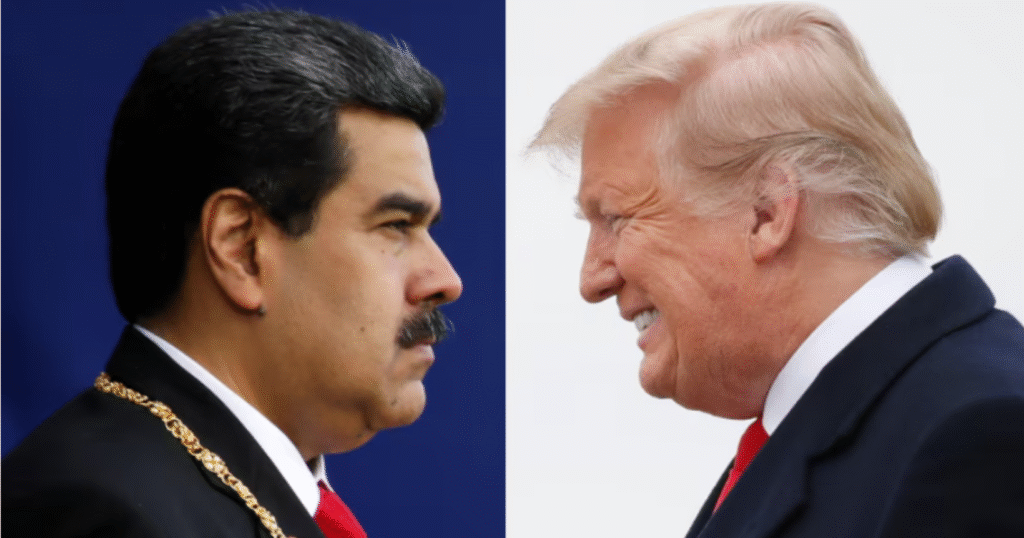
WASHINGTON (CNN) — Intensifying US threats against Venezuela are raising expectations of imminent military action as President Donald Trump heaps pressure on the Caracas regime and flexes power in the Western Hemisphere.
Every public sign and warning by the president raises the risk that the US is on an inexorable path toward a military confrontation that would represent a big political gamble given the public’s antipathy toward new foreign wars.
Trump plans to hold a meeting at the White House this evening about next steps on Venezuela, sources familiar with the matter told CNN. Secretary of Defense Pete Hegseth, Chairman of the Joint Chiefs of Staff Gen. Dan Caine and Secretary of State Marco Rubio are expected to attend, as well as White House chief of staff Susie Wiles and deputy chief of staff Stephen Miller.

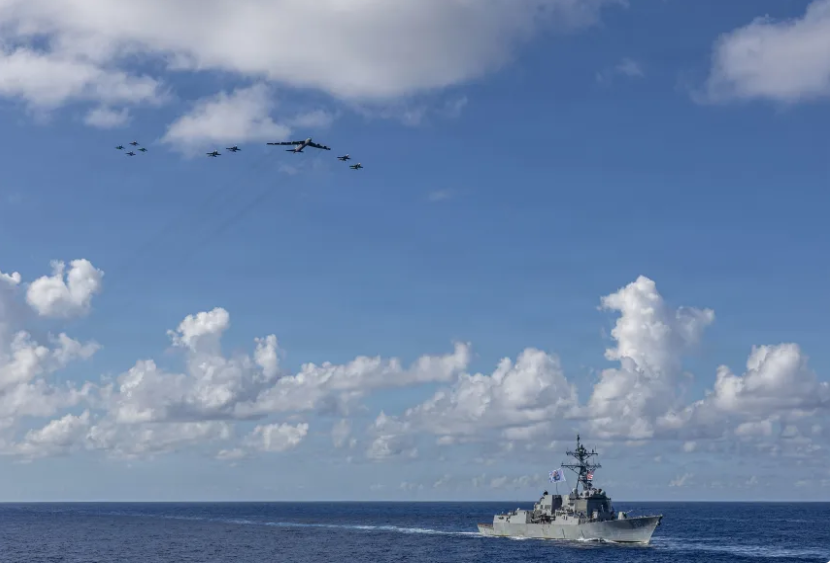
Petty Officer 2nd Class Alice Hu//USS Mahan/US Navy
Controversy is also mounting because of new concerns about the legality of any potential action against Venezuela and warnings that the administration’s lethal strikes against alleged drug-trafficking vessels in the Caribbean have infringed the laws of war. Congressional committees are pledging vigorous, bipartisan oversight of the attacks — a rare occurrence in Trump’s second term.
And in an extraordinary move over the Thanksgiving holiday, Trump appeared to undercut the rationale that he’s fighting regional cartels with the offer of a pardon to a former Honduran president jailed last year in the US for funneling cocaine into the country.
Trump fueled expectations of looming warfare in Venezuela by warning on Thanksgiving Day that the US will “very soon” start taking action to stop alleged drug-trafficking networks on land. On Saturday, he declared the impoverished, oil-rich country’s airspace should be considered closed. An armada of US ships is stationed in the Caribbean Sea off Venezuela, led by the world’s mightiest aircraft carrier, USS Gerald R. Ford. Administration officials have meanwhile spent weeks crafting legal arguments for action against regional drug traffickers that critics warn fall short of legal and constitutional stipulations.
Yet, with the US potentially on the edge of a new war, the administration is yet to provide the public with evidence-based and legally detailed rationales for sending American sons and daughters into action.
This raises the possibility that the buildup and threats are part of a psychological pressure campaign to force President Nicolás Maduro to step down or to encourage officials or generals to topple him. Or a possible military showdown with Venezuela could simply be a new sign this administration sees few political, moral, legal or constitutional curbs on acting exactly how Trump wants.
And even if this is all a bluff to trigger regime change peacefully, officials must soon consider what to do if it fails. Trump’s authority will suffer a huge blow if he draws down US forces with Maduro still in office.
Trump on Sunday confirmed for the first time that he’d spoken over the phone to Maduro recently but did not say when or what he discussed. “I don’t want to comment on it; the answer is yes,” Trump told reporters on Air Force One. “I wouldn’t say it went well or badly. It was a phone call.”

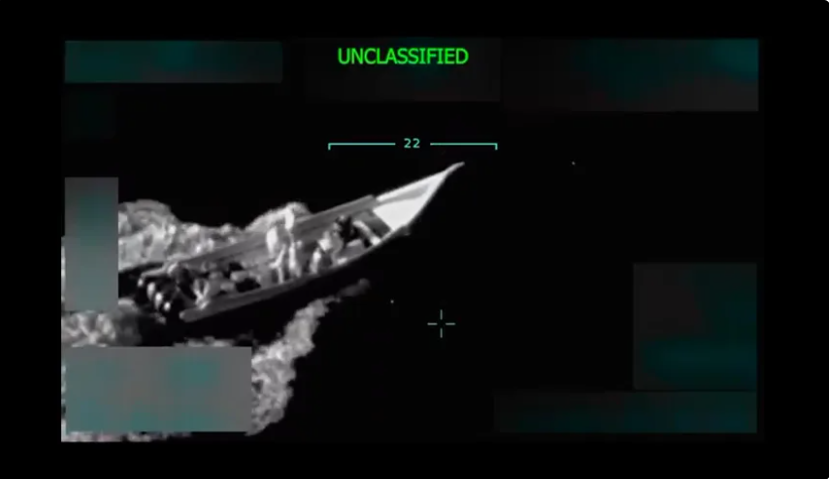
Donald Trump/Truth Social
A political risk
A new US war or concentrated military action abroad would contradict one of the president’s core foreign policy principles — the avoidance of new overseas conflicts. And multiple polls show Americans are opposed to a strike on Venezuela. A CBS News survey last month found 76% didn’t believe that Trump had explained his position there and only 13% saw the country as a major threat to US security.
In the past, some US administrations have made strenuous efforts ahead of military engagement to prepare the public for action and to rally support behind the president — as was the case before the invasion of Iraq in 2003. But apart from vague comments about fighting drug cartels — some of which may overstate Venezuela’s place in the narcotics trade — senior officials have offered few explanations to the public.
Still, millions of Venezuelans would not miss Maduro if he’s toppled after years of repression that has impoverished a country with huge economic potential and led to the flight of millions of refugees, including to the US. There are some scenarios in which Maduro’s departure might benefit US foreign policy and the region — although administration officials have offered little clarity on whether they’ve planned for the day after any military action. The failure to do so in Iraq and Afghanistan led to foreign policy disasters. Some analysts fear regime change could trigger chaos and bloodshed in a nation as fractured as Venezuela, possibly sending even more refugees into neighboring countries and the US.
Sen. Markwayne Mullin, however, defended Trump’s approach. He said on CNN’s “State of the Union” on Sunday the president gave Maduro an invitation to leave and that he’s protecting the US from drug traffickers. “He’s made it very clear we’re not going to put troops into Venezuela,” the Oklahoma Republican told Dana Bash, though Trump hasn’t publicly ruled out that possibility.
Controversy over the administration’s intentions in the region has been fueled further by what people familiar with the incident described to CNN’s Natasha Bertrand as a follow-up US military attack on a suspected drug vessel on September 2 after an initial attack did not kill everyone aboard. Experts and some lawmakers have expressed concern that the so-called double-tap strike would violate the laws of armed conflict, which prohibit the execution of an enemy combatant who is taken out of the fight due to injury or surrender.
Details of the strikes were first reported by The Intercept and The Washington Post. Defense Secretary Pete Hegseth insists all strikes on alleged drugs boats are lawful under US and international law, partly because traffickers have been designated terrorists by the US government. But Trump’s critics argue the president is waging war without acquiring the authorization of Congress as is required by the Constitution and is infringing the victims’ rights to due process.
Democratic Sen. Mark Kelly, a retired Navy captain and fighter jet pilot, said on “State of the Union” that from what he knew about the attack, he would not have carried out the order to conduct a second strike. “If what has been reported is accurate, I have got serious concerns about anybody in that chain of command stepping over a line that they should never step over. We are not Russia. We’re not Iraq,” Kelly said. “They have tied themselves in knots trying to explain to us on the Armed Services Committee how this is legal, not sharing all of the information either, which is really troubling. But going after survivors in the water, that is clearly not lawful.”
Kelly has been warned by the Pentagon that he could be called back into uniform for court-martial over a video he filmed with other Democratic lawmakers reminding military personnel they were not obligated to carry out illegal orders. The lawmakers have said Trump jeopardized their safety after he accused them of “seditious behavior, punishable by death.” He has since denied he was “threatening death” against the group.
The House and Senate armed services committees have pledged to carry out rigorous oversight of the administration’s operations in the Caribbean.
A stunning pardon announcement
Disquiet about the Trump administration’s motives in Latin America is also being fed by an extraordinary announcement by the president that he plans to pardon former Honduran President Juan Orlando Hernández, only a year into a 45-year federal prison sentence for drug trafficking. Hernández was found guilty of conspiring with cartels as they moved 400 tons of cocaine through Honduras to the US and of protecting and enriching drug traffickers in his inner circle.
The president’s pardoning of a leader who operated his country as a narco-state would severely undercut his rationale for using military force against Maduro — whom he accuses of the same offense.
“He was the leader of one of the largest criminal enterprises that has ever been subject to a conviction in US courts. And less than one year into his sentence, President Trump is pardoning him, suggesting that President Trump cares nothing about narco-trafficking,” Virginia Democratic Sen. Tim Kaine said on CBS’ “Face the Nation.” “If he doesn’t care about narco-trafficking … then what is this Venezuela thing really about?”
The president insisted to reporters Sunday that the conviction was a “Biden setup” and implied that no one who had served as a president should face justice for transgressions in office. “You take any country you want — if somebody sells drugs in that country, that doesn’t mean you arrest the president and put him in jail for the rest of his life,” he said.
Mullin said on “State of the Union” there was “probably a good-faith” gesture in the president’s pardon offer, and that he trusted his “natural” approach to foreign affairs.
The comparison of the due process previously offered by the United States to Hernández, who was convicted by a jury, to the fate of drug traffickers blown out of the Caribbean Sea, without officials apparently knowing their identities, is striking.
The timing of Trump’s pardon move suggests an alternative explanation, as it came just before Hondurans voted in a presidential election on Sunday. On Friday, Trump endorsed the populist outsider candidacy of Nasry “Tito” Asfura, who comes from the same conservative National Party as Hernández. His double intervention looks like an attempt to influence the elections, since he threatened in a Truth Social post that the US would not work with any other president but Asfura.
This is far from the first time that Trump has tried to use his power and clout to support MAGA-like leaders in the Western Hemisphere. He slapped a 50% tariff on Brazil after it prosecuted his friend and former President Jair Bolsonaro for trying to overthrow an election. He offered a $40 billion bailout to Argentina, conditional on voters supporting the party of another ally, President Javier Milei, in the midterm elections. Trump has also allied himself with President Nayib Bukele, the leader of El Salvador, who accepted into a notorious prison deportees from the Trump administration’s purge, and who bills himself as “the world’s coolest dictator.” He has feuded with Colombia’s leftist leader, President Gustavo Petro.
There are legitimate foreign policy reasons why the United States might seek closer relations with Latin American leaders, especially as it aims to curtail influence-building efforts in the region by Russia and China. The question now preoccupying Latin America is whether Trump is willing to use the sword, not just executive power and taxpayer cash, to get the regime he wants in Venezuela.
ANALYSIS by STEPHEN COLLINS ON/CNN