


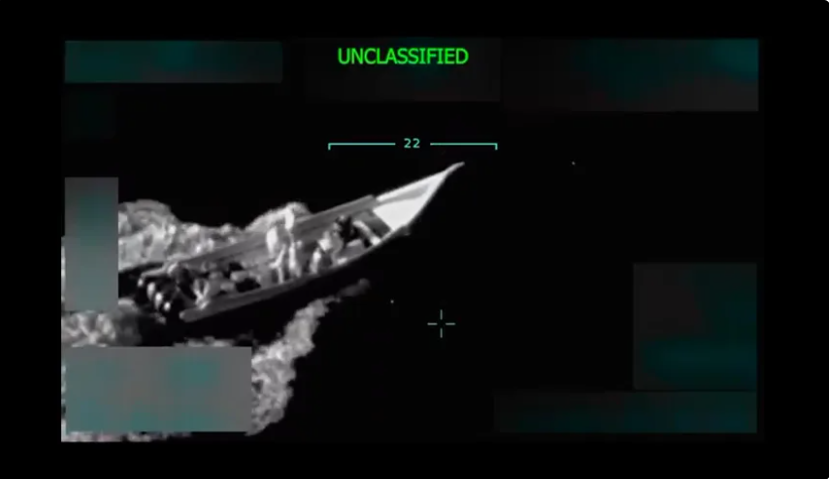
WASHINGTON (Reuters) — The White House on Monday defended a U.S. admiral’s decision to conduct multiple strikes on an alleged Venezuelan drug-smuggling vessel in September, saying he had Defense Secretary Pete Hegseth’s authorization, even as critics questioned the legality of a strike on survivors.
The Washington Post had reported that a second strike was ordered to kill two survivors from the initial strike and to comply with an order by Hegseth that everyone be killed.
President Donald Trump said on Sunday that he would not have wanted a second strike on the boat and said Hegseth denied giving such an order.

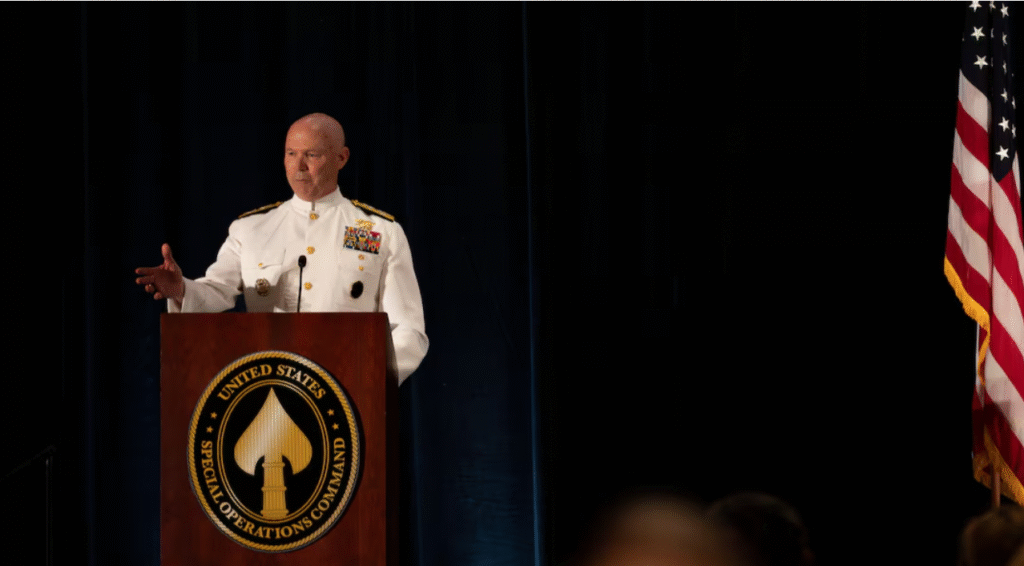
But White House spokeswoman Karoline Leavitt said on Monday that Hegseth had authorized Admiral Frank Bradley to conduct the strikes on September 2.
“Secretary Hegseth authorized Admiral Bradley to conduct these kinetic strikes. Admiral Bradley worked well within his authority and the law directing the engagement to ensure the boat was destroyed and the threat to the United States of America was eliminated,” Leavitt said.
Leavitt said the strike was conducted in “self defense” to protect U.S. interests, took place in international waters and was in line with the law of armed conflict.
“This administration has designated these narco terrorists as foreign terrorist organizations,” Leavitt said.
Starting in September, the U.S. military has carried out at least 19 strikes against suspected drug vessels in the Caribbean and off the Pacific coasts of Latin America, killing at least 76 people.
Critics have questioned the legality of the strikes, and both Republican and Democratic lawmakers have pledged to look into them.
International humanitarian law prohibits attacks on incapacitated combatants. The Defense Department’s Law of War Manual states that shipwrecked persons cannot be knowingly attacked and must receive medical care unless they act with hostility or attempt escape.
George Washington University law professor Laura Dickinson said most legal experts do not believe the boat strikes qualify as armed conflict, so lethal force would only be allowed as a last resort.
“It would be murder outside of armed conflict,” she said. Even in war, the killing of survivors “would likely be a war crime.”
A group of former military lawyers, the JAGs Working Group, called the order “patently illegal,” saying service members have a duty to disobey it and that anyone who complies should be prosecuted for war crimes.
On X, Hegseth defended Bradley, calling him “an American hero” and saying he has his “100% support.” Hegseth said he stands by Bradley’s combat decisions “on the September 2 mission and all others since.”
Trump on Monday discussed with top advisers the
pressure campaign against Venezuela, among other topics, a senior U.S. official said.
US options include effort to oust Maduro
Trump has flagged the possibility of U.S. military intervention in Venezuela. On Saturday, he said the airspace above and surrounding Venezuela should be considered “closed in its entirety,” but gave no further details, stirring anxiety and confusion in Caracas.
Trump confirmed on Sunday that he had spoken to Venezuelan President Nicolas Maduro, whom the U.S. considers an illegitimate leader, but Trump declined to provide details of the conversation.
The Trump administration has been weighing options to combat what it has portrayed as Maduro’s role in supplying illegal drugs that have killed Americans. Maduro has denied having any links to the illegal drug trade.
Reuters has reported the options under U.S. consideration include an attempt to overthrow Maduro, and that the U.S. military is poised for a new phase of operations after a massive military buildup in the Caribbean and nearly three months of strikes on suspected drug boats off Venezuela’s coast. Trump also has authorized covert CIA operations in the country.
By REUTERS
Reporting by Steve Holland and Jeff Mason; additional reporting by Phil Stewart and Tom Hals, Doina Chiacu and Christian Martinez; Editing by Colleen Jenkins, Rosalba O’Brien and Cynthia Osterman
Our Standards: The Thomson Reuters Trust Principles.


