


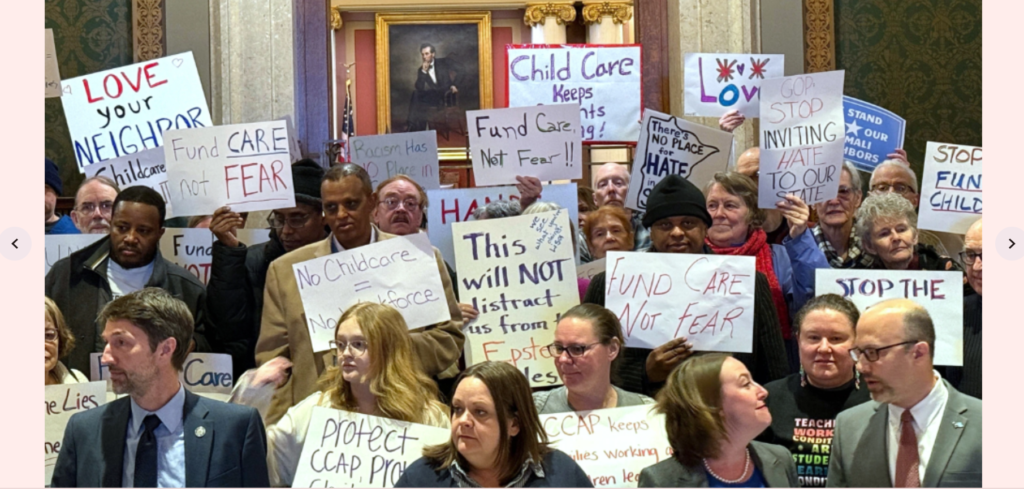
WASHINGTON (AP) — The Trump administration has said it is freezing child care funds to all states until they provide more verification about the programs in a move fueled by a series of fraud schemes at Minnesota day care centers run by Somali residents.
All 50 states will be impacted by the review, but the Republican administration is focusing most of its ire on the blue state of Minnesota and is calling for an audit of some of its centers.
Minnesota Democratic Attorney General Keith Ellison said in a statement Wednesday that he was “exploring all our legal options to ensure that critical childcare services do not get abruptly slashed based on pretext and grandstanding.”
It is unclear how much more robust the verification process for states will be than it already has been.
Deputy Secretary of Health and Human Services Jim O’Neill called the decision a response to “blatant fraud that appears to be rampant in Minnesota and across the country” in a social media post announcing the change on Tuesday.
Here are some things to know about these moves:

More verification needed for all states
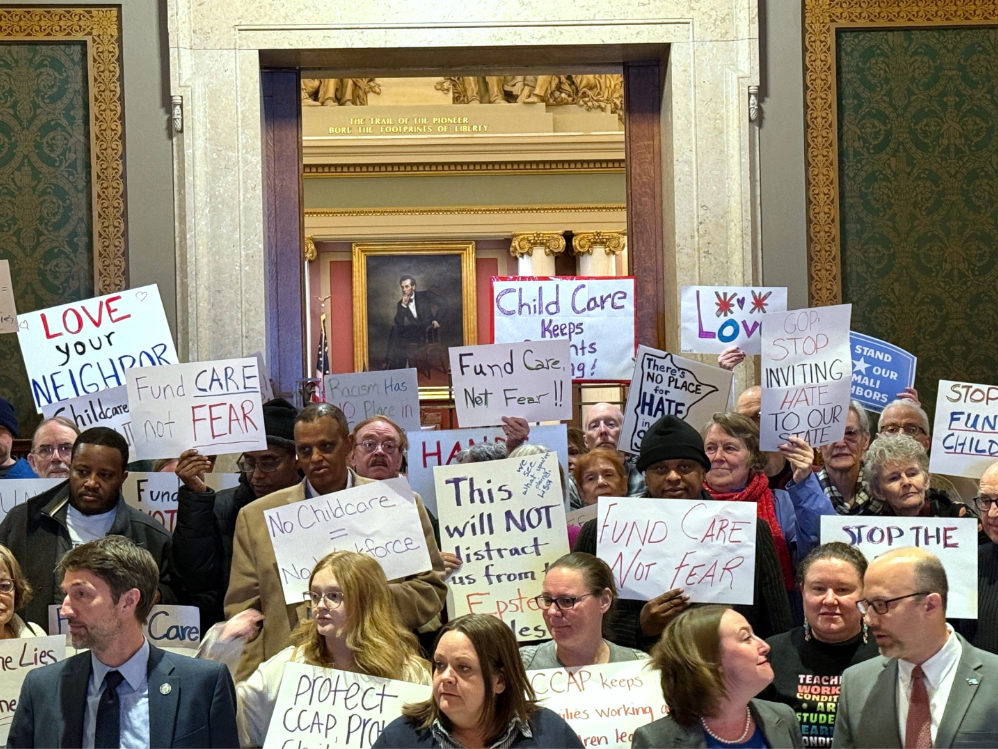
All 50 states will have to provide additional levels of verification and administrative data before they receive more funding from the Child Care and Development Fund, according to a U.S. Department of Health and Human Services spokesperson. However, Minnesota will have to provide even more verification for child care centers that are suspected of fraud, such as attendance and licensing records, past enforcement actions and inspection reports.
In his social media post on Tuesday, O’Neill said all Administration for Children and Families payments nationwide would require “justification and a receipt or photo evidence” before money is sent, but the HHS spokesperson said Wednesday that the additional verifications only apply to CCDF payments.


Walz says Trump is politicizing the issue
Minnesota Gov. Tim Walz, the 2024 Democratic vice presidential nominee, said in a social media post that fraudsters are a serious issue that the state has spent years cracking down on but that this is a political move that is part of “Trump’s long game.”
State Senate Majority Leader Erin Murphy condemned the move in a statement Wednesday.
“Republicans are playing sick games and winning devastating prizes,” Murphy said. “And now, tens of thousands of Minnesota families will pay the price as Donald’s Trump’s agents strip away crucial funding.”
Fraud investigations could stretch to other programs, states
The administration launched efforts in recent weeks to track down fraud in other programs in Minnesota and is looking at fraud in blue states such as California and New York, White House Press Secretary Karoline Leavitt said in an interview with “Fox & Friends” on Wednesday.
The administration will continue to send officers to investigate “potential fraud sites” in Minnesota and deport undocumented immigrants, Leavitt said, adding that the Department of Homeland Security is considering plans to denaturalize citizens.
The Department of Labor is also investigating the state’s unemployment insurance program, Leavitt said. The administration this month threatened to withhold SNAP food aid funding from Democratic-controlled states, including Minnesota, unless they provide information about people receiving assistance.
Attention focused on Minnesota
The announcement came a day after U.S. Homeland Security officials conducted a fraud investigation in Minneapolis, questioning workers at unidentified businesses. Trump has criticized Walz’s administration over the cases, capitalizing on them to target the Somali diaspora in the state, which has the largest Somali population in the U.S.
In his post Tuesday, O’Neill, who is serving as acting director of the Centers for Disease Control and Prevention, referenced a right-wing influencer who posted a video last week claiming he found that day care centers operated by Somali residents in Minneapolis had committed up to $100 million in fraud.
Meanwhile, there are concerns about harassment that home-based day care providers and members of the Somali community nationwide might face amid the vitriol, including Trump’s comments earlier this month referring to Somali immigrants as “garbage.” Washington state Attorney General Nick Brown released a statement saying, “Showing up on someone’s porch, threatening, or harassing them isn’t an investigation. Neither is filming minors who may be in the home.”
Minnesota child care centers are alarmed
Maria Snider, director of the Rainbow Child Development Center and vice president of advocacy group Minnesota Child Care Association, said fear is rising among both families — many of which are living paycheck to paycheck — and child care centers that rely on the federal funding. Without child care system tuition, centers may have to lay off teachers and shut down classrooms, she said.
The Administration for Children and Families provides $185 million in child care funds annually to Minnesota, according to Assistant Secretary Alex Adams.
In Minnesota, the application process for the funding is complex and multilayered, Snider said. Her own child care center has been subjected to random audits, she said, and all centers are required to submit to licensing visits by officials.
“I don’t know what else I would provide,” she said.
Ahmed Hasan, director of the ABC Learning Center that was one of those featured in the video by the right-wing influencer, said on Wednesday that there were 56 children enrolled at the center. Since the video was posted, Hasan, who is Somali, said his center has received harassing phone calls making staff members and parents feel unsafe.
He said the center is routinely subject to checks by state regulators to ensure they remain in compliance with their license.
“There’s no fraud happening here,” Hasan told The Associated Press. “We are open every day, and we have our records to show that this place is open.”
By CHARLOTTE KRAMON/Associated Press
Kramon reported from Atlanta and Brumfield reported from Cockeysville, Maryland. AP Videojournalist Mark Vancleave contributed from Minneapolis, Minnesota, and AP Writer Margery Beck contributed from Omaha, Nebraska.
Kramon covers government and politics from Atlanta. She is a Report for America corps member.
EDITOR’S NOTE: The ongoing federal funding atmosphere has created a complex situation for Head Start centers in the U.S. Virgin Islands. While there have been temporary freezes and proposed cuts at the national level, the impact on the territory involves both national policy shifts and local administrative factors.
1. National Context: Federal Freezes and Delays
Early in 2025, the Trump administration implemented a temporary freeze on federal grants and loan disbursements.
- Initial Disruption: This freeze caused immediate panic and some temporary closures across the U.S. as centers were unable to “draw down” (access) their already-approved funds.
- Legal Challenges: The freeze was met with lawsuits and eventually rescinded in late January 2025. However, the Government Accountability Office (GAO) later found that the administration had violated federal law by withholding nearly $825 million in Head Start funding between January and April 2025.
- Current Status (January 2026): Although the 2026 budget proposal initially sparked fears of total elimination for the program, more recent reports indicate a shift toward “level funding” (keeping funding the same as the previous year). However, a government funding deadline is looming on January 30, 2026, which could trigger further disruptions if a full-year spending bill is not passed.
2. Direct Impact on USVI Head Start Centers
The USVI Department of Human Services (VIDHS), which manages the program, has faced specific challenges over the last year:
- Enrollment-Based Cuts: Independent of national freezes, the USVI program saw its funding reduced by over $2 million in 2025. This was due to “under-enrollment”—a 20.5% drop in students compared to previous years. The funded capacity was reduced from 794 to 637 students.
- Minimal Immediate Operational Impact: Commissioner Averil George testified that because the program was already operating below capacity and many positions were vacant, the $2 million reduction had a “minimal” impact on daily operations for the final year of the current five-year grant.
- Infrastructure Progress: Despite funding uncertainty, the USVI is continuing to open or renovate facilities. For example, the Cruz Bay facility on St. John was completed in late 2025, and other centers like Bolongo and Concordia have been undergoing significant renovations.
3. Key Risks for 2026
- The January 30 Deadline: If Congress does not reach a deal by the end of this month, Head Start centers in the USVI (which rely almost 100% on federal funds) could face a renewal of the “locked out” status that affected centers in Puerto Rico and several U.S. states last year.
- Grant Reapplication: 2026 is a critical “re-competition” year. VIDHS must apply for a new five-year grant. Any changes in federal priorities or stricter requirements (such as the proposed rollbacks of wage increases for staff) could affect the stability of the program long-term.
Summary of Current Status in USVI: As of January 2026, the status of Head Start in the U.S. Virgin Islands (USVI) is a mix of operational progress and high federal uncertainty. While centers remain open, they are navigating a difficult landscape caused by both national policy shifts and local enrollment challenges.
1. Federal Funding Status
- National Stability vs. Local Risk: In late 2025, the Trump administration proposed a budget that initially suggested “zeroing out” Head Start.1 However, the most recent budget outlook for FY2026 indicates a shift toward level funding (keeping the budget the same as 2025).2
- The January 30 Deadline: The most immediate threat is the looming January 30, 2026, federal funding deadline.3 If a new spending bill is not passed, centers could face “lockouts” from federal payment systems, similar to the disruptions seen in early 2025.
- Past Disruptions: In early 2025, a temporary federal grant freeze caused significant “lockouts” where centers could not access funds to pay staff or rent.4 While that freeze was eventually lifted, it left many territories, including Puerto Rico and the USVI, vulnerable to sudden administrative delays.
2. Local USVI Program Status
- Enrollment and Budget Cuts: The USVI program is currently operating with a reduced budget.5 Due to a 20.5% drop in enrollment (631 students vs. a capacity of 794), the federal government cut the territory’s Head Start funding by over $2 million last year.6
- 2026 Grant Re-competition: This is a “re-competition” year for the USVI Department of Human Services (VIDHS).7 They are required to apply for a new five-year grant in 2026.8 This process determines the long-term survival of the program in the territory.
- Staffing Shortages: The program continues to struggle with vacancies, currently seeking to fill at least 11 teacher and assistant teacher positions.
3. Facility and Infrastructure Updates
Despite the budget concerns, several long-awaited construction projects are finally coming online to provide modern spaces for children:
- Cruz Bay (St. John): 100% complete and operational.
- Bolongo (St. Thomas): Significant renovations are largely finished.
- Concordia and Lindberg Bay: These facilities have undergone major repairs and are expected to be fully integrated into the 2026 school year.
Summary Table: USVI Head Start 2026
| Feature | Current Status |
| Federal Access | Threatened by the Jan 30, 2026 budget deadline. |
| Annual Funding | Reduced to $8.3 million due to lower enrollment. |
| Student Capacity | Reduced from 794 to 637 slots. |
| Construction | Active; several new facilities opened late 2025/early 2026. |
Operational Funding: Operational funding for Head Start in the U.S. Virgin Islands is currently in a “hold-and-wait” period due to the January 30, 2026 federal budget deadline. While centers are open and functioning, they are operating under a more restrictive financial model than in previous years.
1. Current Funding Levels (FY 2026)
The USVI Head Start program is currently operating with a base federal budget of approximately $8.3 million.
- The Reduction: This is a permanent cut of over $2 million from previous years.
- The Cause: This cut was triggered by local under-enrollment (a 20.5% drop in students) rather than a national policy change. The federal government reduced the “funded slots” from 794 down to 637 children to match actual attendance numbers.
- The Impact: Commissioner Averil George of the Virgin Islands Department of Human Services (VIDHS) stated that this reduction has a “minimal” impact on daily operations for now because the program already had many vacant staff positions and was serving fewer children.
2. Threats to Cash Flow: The “Lockout” Risk
The primary concern for operational funding in the USVI is the federal Payment Management System (PMS).
- Past Experience: In early 2025, a temporary freeze on federal grant disbursements caused USVI and Puerto Rico centers to be “locked out” of their funds. They could not “draw down” money to pay for immediate needs like payroll, food, and utilities.
- Upcoming Deadline: A similar risk exists right now. If Congress and the Administration do not pass a full-year spending bill or a “Continuing Resolution” by January 30, 2026, the federal government could enter a partial shutdown. This would likely freeze the ability of VIDHS to access its Head Start grant money until a deal is reached.
3. The “Level Funding” Outlook
Despite early 2025 proposals to eliminate the program entirely, the latest FY 2026 federal budget proposal has shifted to “level funding.”
- This means the federal government plans to provide the same amount of money as last year, without adjusting for inflation or rising costs of supplies and electricity in the USVI.
- While this “saves” the program from closure, it effectively functions as a budget squeeze, as the cost of running centers in the Territory continues to rise.
4. Local Mitigation Efforts
To protect the program from federal instability, the USVI government has:
Re-competition Prep: 2026 is a mandatory re-application year for the five-year grant. The Territory is currently fighting to prove its enrollment numbers are stabilizing to prevent further cuts in 2027.
Increased Utility Budgets: Allotted $2.6 million (a 14% increase) for utilities to ensure that centers with newly installed air conditioning or those undergoing renovations can keep the lights on even if federal cash flow is delayed.