


By: JOHN McCARTHY/V.I. Free Press Staff
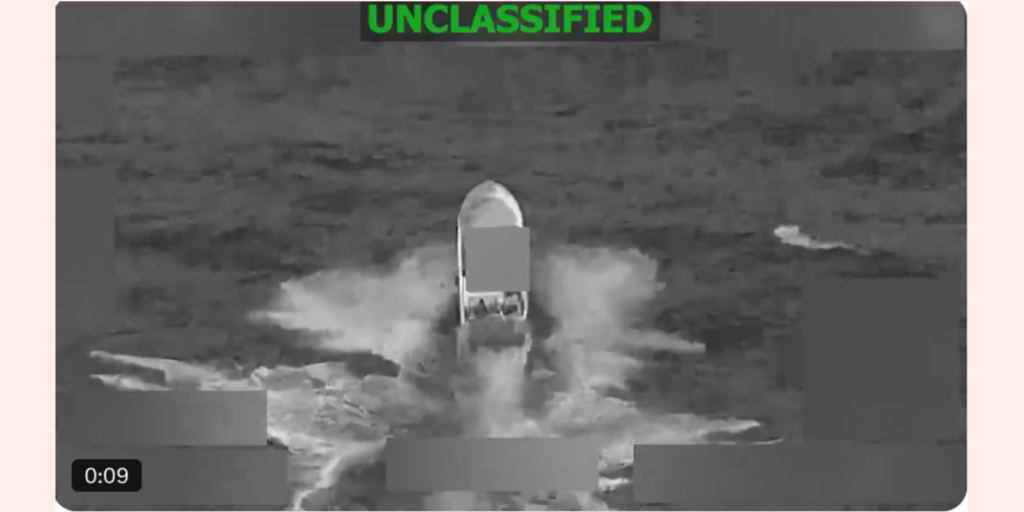
FREDERIKSTED —U.S. Southern Command (SOUTHCOM) announced late February 5 that Joint Task Force Southern Spear carried out a lethal kinetic strike on a vessel linked to Designated Terrorist Organizations in the Eastern Pacific. The action, authorized by SOUTHCOM’s new commander, Gen. Francis L. Donovan, killed two individuals described as narco-terrorists. No U.S. forces were injured.
In its official statement posted on X (and cross-posted to the SOUTHCOM website), the command stated:“On Feb. 5, at the direction of #SOUTHCOM Commander Gen. Francis L. Donovan, Joint Task Force Southern Spear conducted a lethal kinetic strike on a vessel operated by Designated Terrorist Organizations. Intelligence confirmed the vessel was transiting along known narco-trafficking routes in the Eastern Pacific and was engaged in narco-trafficking operations. Two narco-terrorists were killed during this action. No U.S. military forces were harmed.”
This is the latest in Operation Southern Spear, the aggressive U.S. counter-narco-terrorism campaign initiated in late 2025 under the Trump administration. The operation has involved repeated lethal strikes on suspected drug vessels—primarily in the Caribbean and now expanding into the Eastern Pacific—aimed at disrupting transnational criminal networks that fuel drug flows into the United States and its territories.
For the U.S. Virgin Islands, the relevance is direct and longstanding. The USVI sits within SOUTHCOM’s area of responsibility and has historically been impacted by maritime drug routes that transit the Caribbean basin. Congressional testimony and federal reports (including from the 1990s–2020s) have repeatedly identified the approaches to Puerto Rico and the USVI as key transshipment corridors for cocaine and other narcotics moving north from South America. Shifts in trafficking patterns—often driven by U.S. interdiction efforts farther south or west—have periodically increased pressure on Caribbean gateways, contributing to local violence, corruption risks, and community harm.
While upstream disruptions like this Eastern Pacific strike could theoretically reduce downstream volumes reaching the Virgin Islands, regional officials and residents have long expressed mixed views on such kinetic operations. Past high-intensity efforts (e.g., operations targeting routes into Puerto Rico/USVI) have yielded seizures but also raised concerns about unintended consequences, including violence spillover and questions over due process on the high seas.
Gen. Donovan, a Marine with extensive special operations experience, assumed command earlier on Feb. 5, succeeding acting commander Lt. Gen. Evan L. Pettus. His leadership coincides with intensified activity under Southern Spear, which SOUTHCOM describes as essential to protecting the homeland and regional partners from narco-terrorism threats—including groups designated as terrorist entities by the U.S.
No further details were released on the vessel’s flag, the strike method (e.g., missile, drone), or post-strike actions. SOUTHCOM emphasized that such operations continue as part of broader hemispheric security efforts.
The U.S. Virgin Islands community continues to monitor these developments closely, given the islands’ vulnerability to the drug trade’s effects. Local law enforcement and federal partners (including through the Puerto Rico/USVI High Intensity Drug Trafficking Area program) collaborate on interdiction, but the human and economic toll remains a persistent challenge.
SOURCES: Official SOUTHCOM statement (Feb. 5, 2026), SOUTHCOM leadership announcements, historical U.S. government reports on Caribbean drug routes (e.g., congressional hearings, National Drug Control Strategy documents), and open-source tracking of Operation Southern Spear.