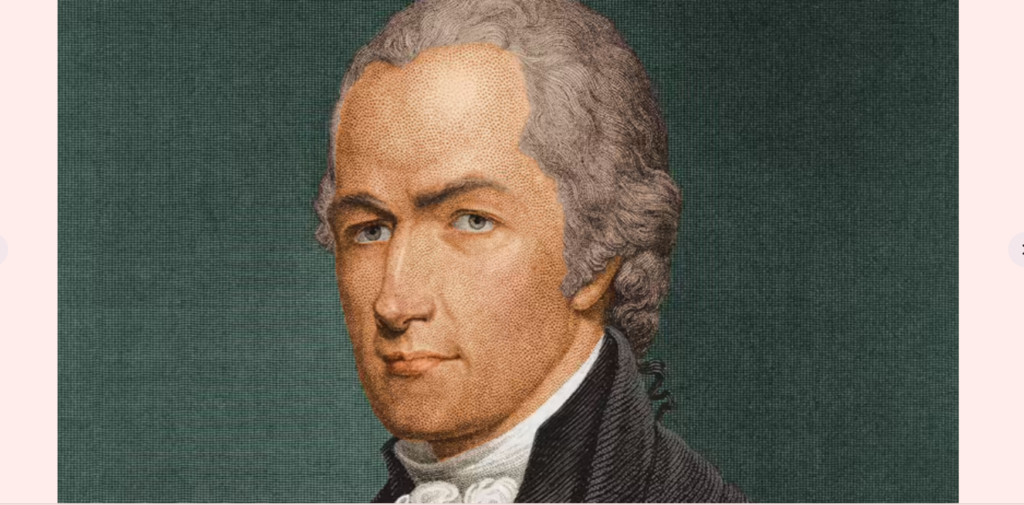
Here’s Grok’s response to how the United States might have been different if Alexander Hamilton, JFK and RFK had lived full lives:
Alexander HamiltonIf Alexander Hamilton had lived a full life—say, into his 70s or 80s instead of dying at 49 in that infamous duel with Aaron Burr in 1804—the early American republic might have looked quite different. Hamilton was a Federalist powerhouse: architect of the U.S. financial system, advocate for a strong central government, and a key figure in Washington’s administration. Without his early death, he could have continued shaping policy and politics.
- Economic Legacy Amplified: Hamilton’s vision for industrialization and banking was already influential, but a longer life might have pushed the U.S. toward faster modernization. He could have lobbied against Jeffersonian agrarianism more effectively, potentially accelerating urban growth and infrastructure projects. Imagine an earlier emphasis on manufacturing hubs in the Northeast, possibly shortening the timeline for the Industrial Revolution in America.
- Political Influence: Hamilton was ambitious and might have run for president himself after Jefferson’s terms. If successful, he could have strengthened the Federalist Party, delaying its decline. This might have led to a more centralized federal government earlier, with implications for states’ rights debates—perhaps altering the lead-up to the Civil War by reinforcing national unity over sectionalism.
- Foreign Policy: As a pro-British thinker, Hamilton might have steered the U.S. away from the War of 1812 or negotiated better trade deals. His survival could have prevented Burr’s political ascent (and scandals), stabilizing early party politics.
Overall, the U.S. might have emerged as a more commercially aggressive nation sooner, but at the cost of deeper class divides, as Hamilton’s elitism often clashed with populist sentiments.John F. Kennedy (JFK)JFK’s assassination in 1963 cut short a presidency at age 46, right as the 1960s turbulence was ramping up. If he’d lived to complete his term and possibly win re-election in 1964 (which seemed likely), the trajectory of the Cold War, civil rights, and Vietnam could have shifted dramatically.
- Vietnam War: JFK was skeptical of deep U.S. involvement in Vietnam, having resisted full escalation during his term. A surviving JFK might have withdrawn advisors earlier or negotiated a neutralist solution, avoiding the quagmire that defined LBJ’s presidency. This could have prevented the deaths of over 58,000 Americans, reduced anti-war protests, and preserved national unity—possibly averting the cultural rifts of the late ’60s.
- Civil Rights and Domestic Policy: Kennedy’s administration laid groundwork for the Civil Rights Act, but LBJ pushed it through. JFK, with his charisma, might have advanced it more gradually but with broader bipartisan support, potentially reducing backlash in the South. His “New Frontier” programs could have expanded, leading to earlier progress on poverty, education, and space exploration—maybe landing on the Moon even sooner than 1969.
- Cold War Dynamics: JFK navigated the Cuban Missile Crisis masterfully; a longer tenure might have thawed U.S.-Soviet relations faster, perhaps through more summits with Khrushchev. Assassination theories aside, his survival could have diminished the military-industrial complex’s influence, altering U.S. foreign policy toward less interventionism.
In essence, the U.S. might have avoided some of the Vietnam-era scars, emerging from the ’60s with stronger social cohesion and a more optimistic national psyche, though JFK’s personal scandals (revealed later) could have complicated his legacy.Robert F. Kennedy (RFK)RFK was assassinated in 1968 at 42, just after winning the California primary in his presidential bid. If he’d lived, he likely would have secured the Democratic nomination and possibly beaten Nixon in the general election, reshaping the late 20th century.
- 1968 Election and Vietnam: As an anti-war candidate, President RFK might have ended U.S. involvement in Vietnam by 1969 or 1970, saving lives and redirecting resources to domestic issues. This could have prevented Watergate (no Nixon), avoiding the cynicism that eroded trust in government.
- Social Justice Focus: RFK’s empathy for the poor and marginalized—honed as Attorney General and Senator—might have led to bolder Great Society expansions. Think enhanced anti-poverty programs, stronger labor rights, and earlier environmental protections. His coalition of minorities, working-class whites, and youth could have bridged divides, potentially mitigating the rise of identity politics in the ’70s and ’80s.
- Long-Term Legacy: A RFK presidency might have influenced Supreme Court picks, affecting rulings on abortion, guns, and civil liberties. Globally, he could have pursued détente with the Soviets earlier, altering the arms race. If he served two terms, the Democratic Party might have stayed more centrist, impacting figures like Reagan’s rise.
The U.S. could have been a more equitable society today, with less economic inequality and a stronger social safety net, but perhaps at the expense of fiscal conservatism that fueled ’80s growth.Broader ReflectionsThese “what ifs” highlight how individual lives can pivot history. A longer-lived Hamilton might have made the U.S. more Hamiltonian (centralized, industrial), while the Kennedys could have steered it toward a more compassionate, less militarized path. Collectively, their full lives might have resulted in a nation with fewer wars, deeper social reforms, and a stronger federal framework—but also unforeseen butterflies, like different economic booms or cultural shifts. History’s a complex web; these are educated guesses based on their known trajectories.
Alexander Hamilton began working as a clerk at age 11 (some sources suggest as young as 9 or 10) in 1766–1768 for the import-export firm Beekman and Cruger, located at 7 and 8 King Street in Christiansted, St. Croix. He later managed the firm when Nicholas Cruger was away, gaining, as he described, the most useful part of his education.
Key Locations and Details:
- The Business: Beekman and Cruger was a mercantile firm on King Street.
- Location: The building at 7 & 8 King Street, which was rebuilt in the late 1700s, housed the firm.
- Age: Hamilton started in 1766 at age 11.
- Other Location: His mother operated a small shop at 34 Company Street, where the family resided after 1765.
Hamilton’s experience in this bustling Christiansted commercial center provided him with early expertise in international trade and finance.