By JOHN McCARTHY / @ the V.I. Freep Investigative Desk
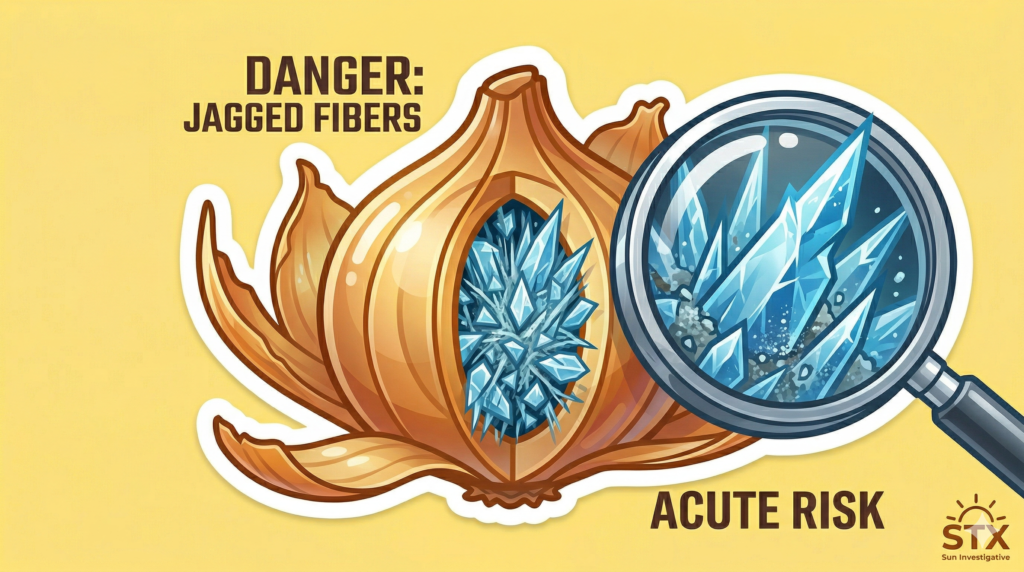
It’s been decades since John Lennon sang about the layers of truth in “Glass Onion,” but the song’s core lesson—that looking through a lens doesn’t always reveal the full picture—has a strange, dangerous resonance on St. Croix in 2026. The latest “wellness” trend sweeping YouTube and TikTok isn’t just a misread of science; it’s a physical trap that is landing people in the emergency room.
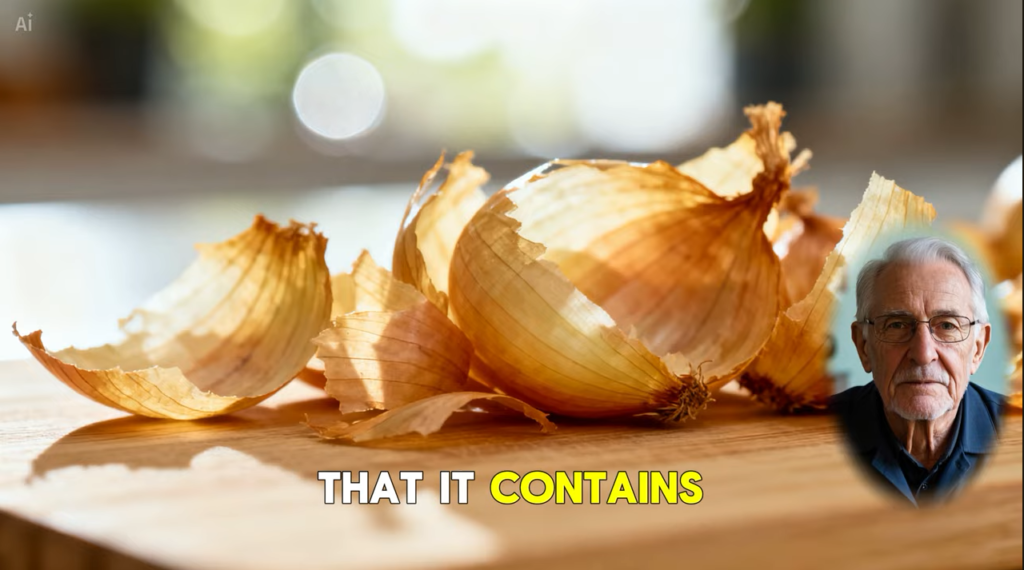
We are, of course, talking about the “onion skin” health hack. A polished generation of influencers, desperate for fresh “zero-waste” content, has targeted the outer coppery layers of the Allium family. They claim these paper-thin scraps are the key to unlocking massive doses of quercetin, an anti-inflammatory bioflavonoid. They suggest blending them into smoothies, sprinkling them over salads, or boiling them into a rice dish—as this reporter initially attempted.
But here is the ‘Glass Onion’ truth: If you look through the coppery veneer of the trend, the reality is a dangerous mix of lignin, cellulose, and environmental contaminants that your body is biologically incapable of processing.
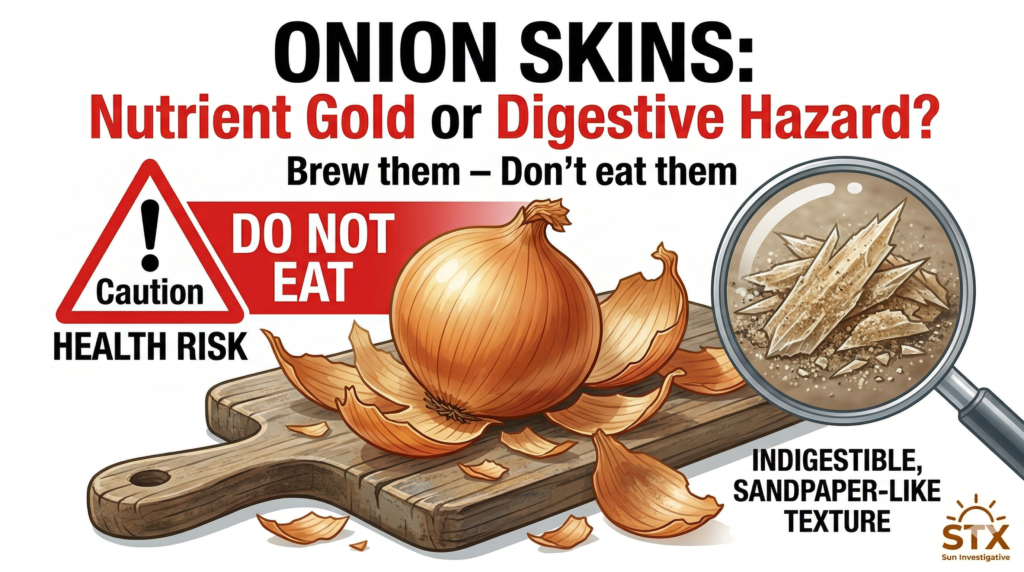
The Lignin Trap: Why You Aren’t a Termite The primary hardware issue is structural. Onion skins are composed of lignin and cellulose, the exact materials that give wood its rigidity. Termites and some ruminant animals (like cows) possess the enzymes (cellulase) necessary to break down these complex fibers for energy. Human beings do not.
When you ingest these skins, you are introducing a foreign, structurally resistant element into your digestive tract. Far from being a source of nutrients, these sharp, papery shards act like biological grit, irritating the stomach lining. In high-volume scenarios, this indigestible “hairball” can coalesce into a bezoar, creating a painful and sometimes surgical intestinal obstruction.

The Chemical Catch: Pesticides and Pathogens
The danger isn’t just physical. The outer skin is the environmental frontline of the vegetable, collecting whatever the soil and the farm left behind.
- Pesticide Concentration: In conventional agriculture, pesticide residue often concentrates on the dry outer skins. Washing them—a task far more difficult than washing the smooth interior—rarely removes the embedded chemicals.
- Pathogens: The dry surface is an ideal environment for Salmonella or E. coli to survive.
- The Black Mold Factor: Aspergillus niger, a common black mold, frequently hides just beneath that first layer of coppery skin. Eating the material whole means you are introducing this fungal colony directly into your body.
The Safe Extraction: ‘The Bay Leaf Rule‘
The science on the quercetin itself is sound. Onion skins can have 20 times the quercetin of the flesh. The goal isn’t to abandon the nutrients; it’s to abandon the “zero-waste” idea of eating the packaging.
“The rule in our kitchen now is the ‘Bay Leaf Rule,'” says Publisher John Francis McCarthy. “You put the whole onion skins into the stock pot for the color and the nutrients, but you always remove them with a slotted spoon before serving. Don’t eat the box the food came in.”
The St. Croix Sun and V.I. Freep urge the Virgin Islands Department of Health to issue immediate guidance clarifying the difference between safe extraction (straining) and dangerous consumption (eating) of these “zero-waste” scraps. It’s time to look through the ‘Glass Onion’ of viral advice and prioritize biology over the aesthetic.

Musk Note: In engineering, you can’t ignore the material properties. If you use a material that can’t withstand the thermal and physical stresses of the engine, the engine will fail. Your digestive tract is a high-performance engine—don’t fuel it with materials it was never designed to process.