


By: Virgin Islands Free Press News Desk
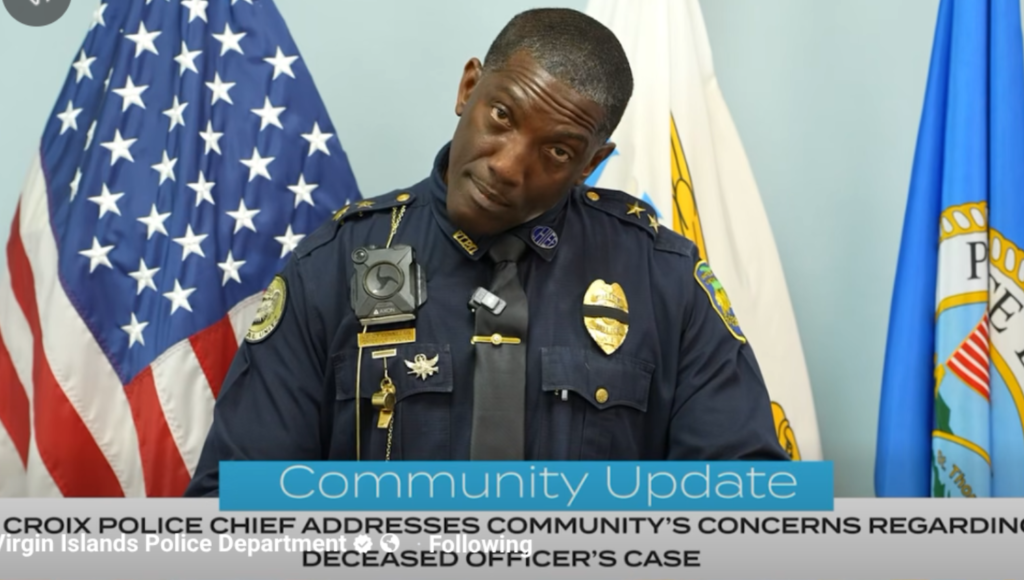
ST. CROIX — When VIPD Chief Uston Cornelius took to Facebook in a heavily edited video address to respond to accusations of “two-tiered justice,” the goal of the department was clear: manage the narrative, address the public outrage over the lightning-fast arrest in Officer Eustace Charles’s murder, and explain away a dismal 6.6% homicide clearance rate (15 murders, 1 arrest in 2026).
Instead, the department set off a unstoppable chain reaction.
By attempting to pass the buck back to the public under the banner of a “wall of silence,” the Chief didn’t extinguish the flames—he threw gasoline on a long-simmering volcano. When the Virgin Islands Free Press published the verbatim breakdown and invited the community to speak Direct to Docket, the response wasn’t just a handful of opinions. It was a tsunami of grief, anger, and institutional mistrust that has breached the dam entirely.
Phase 1: The Initial Spark — ‘Apathy’ and the PR Illusion
The initial wave of commentary didn’t buy the executive spin. Readers immediately dismantled the official narrative of high-tech departmental efficiency.
Commenter Greg Ryobi called out the department’s admitted capabilities, writing: “Of course it’s not favoritism. It’s apathy. The Chief already admitted that when they’re committed, they have the technology and resources to make timely arrests.”
Meanwhile, commenter Red Line stripped away the polished PR presentation entirely, exposing the sheer danger faced by boots-on-the-ground officers while executives took credit from behind a desk:
“Y’all don’t understand what went on… they got lucky… the only one can get credit is the brave police that followed him all the way… knowing the man have a big gun… don’t make it look like the police did a good job.”
It was commenter Craysea Cruzan who coined the phrase that ignited the next news cycle: “This is called a ‘cop-out’ video.”
Phase 2: The Cascade — Unearthing Decades of Lost Faith
When the V.I. Freep put those raw initial reactions back out to the territory and asked where the community stood, the comment section transformed into a raw, public docket of unresolved crime and systemic neglect.
The myth of a simple “wall of silence” fell apart under the weight of personal history:
- Unsolved Trauma: “My heart has been hardened since 1996,” shared Nats Ball. “My family has gotten no justification nor response from the police department for 2 of my family members who disappeared with no trace. There has been no changes in that department ever since. Same old story.”
- Systemic Corruption: Wayne Clark recounted witnessing physical evidence being destroyed by law enforcement personnel in a prior case, only to be met with federal indifference—citing “Don’t Stop the Carnival” to underscore the absurdity of local justice.
- Faded Priority: Mary Kabbage and others questioned why high-profile civilian shootings—including a 4-year-old child—vanish from official updates, with Craysea Cruzan responding bitterly: “These idiots have lost the file.”
Phase 3: The Leadership Crisis & The Street Justice Threshold
As the fury mounted, the conversation shifted from individual cold cases to the fundamental legitimacy of the police department itself.
Commenter Clarence Michael Conner raised the ultimate administrative question, comparing the USVI’s lack of accountability to mainland standards:
“Is the number because there’s a trust issue with the community and the police department? Is the police department not up to par for the job at hand?… My last hometown of Seattle just retired their police chief due to a loss of faith… What does it take to change leadership here looking at the questions being asked?”
Others, like Monique Wilson, expressed a level of alienation so severe it mirrors jurisdictions where the social contract has completely dissolved: “THEY DO NOT WORK FOR US, THEY WORK FOR THE OTHER SIDE!! THATS WHY THEY DO NOT CATCH OR SOLVE ANYTHING!!”
When a community begins to believe that police only work for themselves or the criminal underworld, civil society reaches a dangerous precipice. When citizens feel that contacting the police yields zero results—or invites retaliation—witnesses don’t just clam up; they go extinct. The system degrades into direct street justice.
Even defenders of the department, like Natasha Drew, who urged that “They can’t do their job if no one is talking,” found their arguments swallowed up by a public that feels it has given everything to the VIPD for decades and gotten nothing back in return.
The Unstoppable Docket
We have reached a point of no return. Bypassing the standard corporate PR filters and gatekeepers has exposed a truth that is as unsettling as it is undeniable: St. Croix is not just frustrated—it is exhausted.
The 6.6% clearance rate is no longer just a figure on an official ledger. It is a monument to thirty years of unanswered phone calls, buried files, and broken promises.
Chief Cornelius asked the public to look in the mirror. The public looked—and handed the mirror right back to him.
The chain reaction is live. And no amount of edited videos or PR spin can put the fallout back in the box.
Where do we go from here? Is structural, top-down leadership change the only way to rebuild trust in the VIPD, or has the breach gone too deep? Read the raw, unedited community comments on VIFreePress.com and join the debate.