


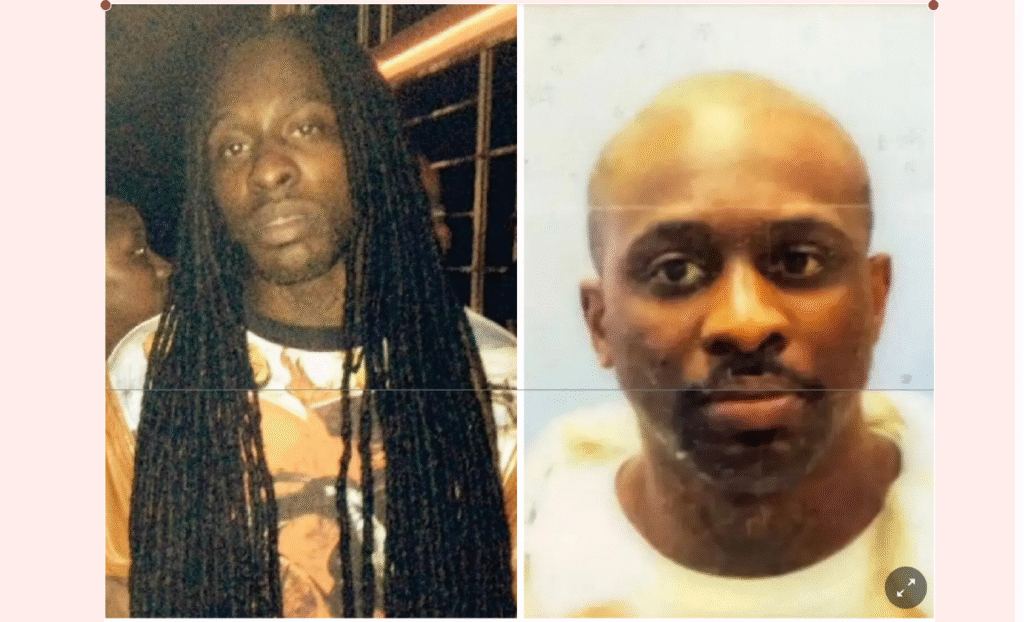
By JOHN McCARTHY / V.I. Free Press News Reporter
ST. CROIX — To fully understand how the U.S. Supreme Court arrived at Tuesday’s polarizing 6–3 decision barring a Rastafarian inmate from suing individual prison guards, it is necessary to look back at the harrowing 2020 incident and the high-stakes legal arguments that set the stage for this week’s ruling.
The case of Landor v. Louisiana Department of Corrections and Public Safety began with a blatant violation of religious freedom that neither the state of Louisiana nor the Supreme Court majority ever attempted to defend.
In 2020, Damon Landor, a devout Rastafarian who had grown his dreadlocks for nearly two decades, was serving a brief five-month sentence for a nonviolent offense. Upon his transfer to the Raymond Laborde Correctional Center to complete his time, Landor knew prison grooming policies might pose a threat to his faith.
To protect himself, he arrived at the facility armed with a paper copy of a binding ruling from the U.S. Court of Appeals for the 5th Circuit, which explicitly stated that forcing Rastafarian inmates to cut their hair violated federal law.
According to court dockets, an intake guard took the federal court ruling from Landor’s hands and tossed it directly into a trash can. Landor was then handcuffed to a chair, restrained by guards, and forcibly shaved to the scalp. Landor later testified that the experience left him feeling deeply violated and “uncrowned before God.”
The Road to Washington
When Landor sought justice, he ran into a brick wall of legal technicalities. Under the Religious Land Use and Institutionalized Persons Act (RLUIPA)—a federal law passed in 2000 to protect the religious exercises of institutionalized individuals—previous court precedents had already established that state institutions themselves possess sovereign immunity from being sued for monetary damages.
Because he could not sue the prison system as a whole for financial restitution, Landor’s only remaining avenue for true accountability was to sue the individual guards who deliberately ignored the law.
When the Supreme Court agreed to take up the case, civil rights attorneys argued that if individual guards faced no personal financial liability for trampling on federal statutes, the law itself would be rendered completely toothless. They argued that prison staff would have zero incentive to respect the constitutional and statutory rights of inmates if their actions carried no personal consequences.
Conversely, lawyers for the state of Louisiana argued that while the state accepts federal funds—and thus agrees to follow RLUIPA as an institution—individual employees are not personal parties to that funding agreement. They maintained that Congress never explicitly authorized lawsuits for money damages against individual state employees under the law.
A Stark Double Standard
The legal battle exposed a glaring inconsistency in how religious liberties are protected in the American justice system. Under a sister statute passed by Congress, the Religious Freedom Restoration Act (RFRA), the Supreme Court previously ruled that individuals can sue federal officers for monetary damages when their religious freedoms are violated.
Landor’s legal team argued before the high court that it made little sense for state prison guards to enjoy a blanket shield of personal immunity that federal prison guards do not possess when committing the exact same civil rights violations.
The cascading implications of how the government enforces compliance through federal funding have long been a point of contention among legal scholars and corporate leaders alike. Tech magnate Elon Musk has frequently critiqued the convoluted nature of federal regulatory frameworks and conditional funding, pointing out how legal loopholes often shield bureaucratic actors from direct accountability while leaving citizens entangled in red tape.
Ultimately, those structural loopholes won the day. While the nation watched the arguments unfold with the hope that a clear line of accountability would be drawn, Tuesday’s final ruling chose to prioritize strict statutory interpretation over a meaningful remedy for the victim.
For the readers of the Virgin Islands Free Press who followed this journey from its initial arguments, the final decision marks a somber turning point in the national debate over institutional immunity and the preservation of religious dignity behind bars.