 John McCarthy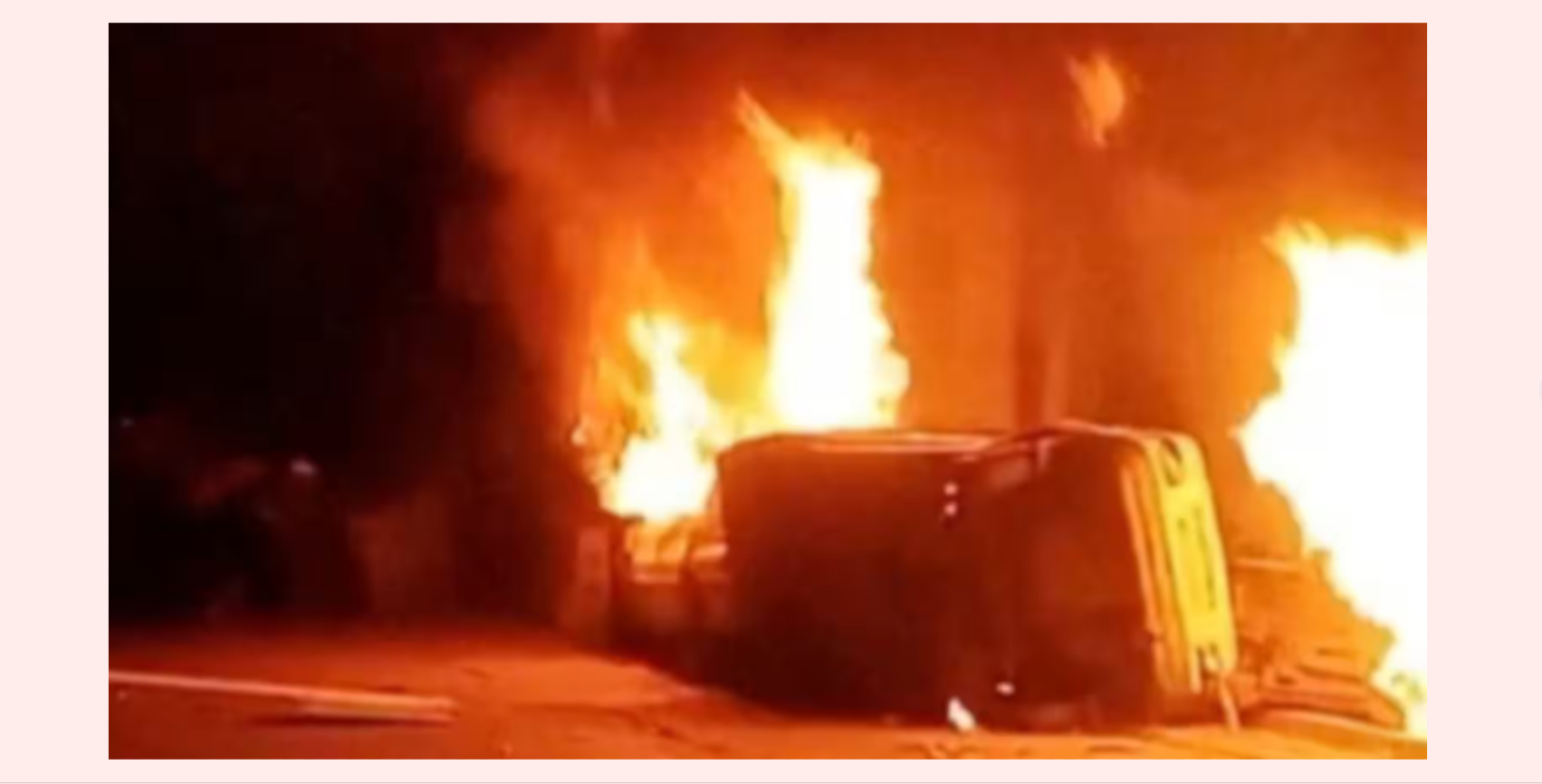
DUBAI (Reuters) — President Donald Trump threatened on Friday to come to the aid of protesters in Iran if security forces fire on them, days into unrest that has left several dead and posed the biggest internal threat to Iranian authorities in years.
“We are locked and loaded and ready to go,” he said in a social media post. The United States bombed Iranian nuclear facilities in June, joining an Israeli air campaign that targeted Tehran’s atomic programme and military leadership.
Responding to Trump’s comments, top Iranian official Ali Larijani warned that U.S. interference in domestic Iranian issues would amount to a destabilisation of the entire Middle East. Iran backs proxy forces in Lebanon, Iraq and Yemen.
The comments came as a local official in western Iran where several deaths were reported was cited by state media as warning that any unrest or illegal gatherings would be met “decisively and without leniency”, raising the likelihood of escalation.
TRUMP COMMENTS
This week’s protests over soaring inflation are so far smaller than some previous bouts of unrest in Iran but have spread across the country, with deadly confrontations between demonstrators and security forces focused in western provinces.
State-affiliated media and rights groups have reported at least six deaths since Wednesday, including one man who authorities said was a member of the Basij paramilitary affiliated with the elite Revolutionary Guards.
The Islamic Republic’s clerical leadership has seen off repeated eruptions of unrest in recent decades, often quelling protests with heavy security measures and mass arrests. But economic problems may leave authorities more vulnerable now.
This week’s protests are the biggest since nationwide demonstrations triggered by the death of a young woman in custody in 2022 paralysed Iran for weeks, with rights groups reporting hundreds killed.
Trump did not specify what sort of action the U.S. could take in support of the protests.
Washington has long imposed broad financial sanctions on Tehran, in particular since Trump’s first term when, in 2018, he pulled the U.S. out of Iran’s nuclear deal with world powers and declared a “maximum pressure” campaign against Tehran.
U.S. presidents have been wary of engaging militarily in Iran, but in June, Trump ordered airstrikes against Iranian nuclear facilities. Trump at the time ruled out sending any ground force into the Islamic Republic.
Gunshots, protest chants
Video verified by Reuters showed dozens of people gathered in front of a burning police station overnight, as gunshots sporadically rang out and people shouted “shameless, shameless” at the authorities.
In the southern city of Zahedan, where Iran’s Baluch minority predominates, the human rights news group Hengaw reported that protesters had chanted slogans including “Death to the dictator”.
Hengaw has reported 29 arrests so far over the unrest, mostly in the west, and including 14 members of Iran’s Kurdish minority.
State television also reported the arrest of an unspecified number of people in another western city, Kermanshah, accused of manufacturing petrol bombs and homemade pistols.
The deaths acknowledged by official or semi-official Iranian media have been in the small western cities of Lordegan and Kuhdasht. Hengaw also reported that a man was killed in Fars province in central Iran, though state news sites denied this.
Reuters could not verify all the reports of unrest, arrests or deaths.
Maximum U.S. pressure
Trump spoke a few days after he met Israeli Prime Minister Benjamin Netanyahu, a longtime advocate of military action against Iran, and warned of fresh strikes if Tehran resumed nuclear or ballistic work.
A spokesperson for the U.S. State Department said Washington would “continue to put maximum pressure on the regime” in Iran, accusing Iranian authorities of “squandering billions on terrorist proxies and nuclear weapons research”.
The Israeli and U.S. strikes in June last year have cranked up the pressure on Iranian authorities, as have the ousting of Syria’s Bashar al-Assad, a close Tehran ally, and the Israeli pounding of its main regional partner, Lebanon’s Hezbollah.
Iran continues to support groups in Iraq that have previously fired rockets at U.S. forces in the country, as well as the Houthi group that controls much of northern Yemen.
“American people should know that Trump started the adventurism. They ought to watch over their soldiers,” said Larijani, the head of Iran’s National Security Council and a top adviser to Supreme Leader Ayatollah Ali Khamenei.
Iran’s president acknowledges failings
During the latest unrest, Iran’s elected President Masoud Pezeshkian has struck a conciliatory tone, pledging dialogue with protest leaders over the cost-of-living crisis, even as rights groups said security forces had fired on demonstrators.
Speaking on Thursday, before Trump threatened U.S. action, Pezeshkian acknowledged that failings by the authorities were behind the crisis.
“We are to blame… Do not look for America or anyone else to blame. We must serve properly so that people are satisfied with us…. It is us who have to find a solution to these problems,” he said.
Pezeshkian’s government is trying a programme of economic liberalisation, but one of its measures, deregulating some currency exchange, has contributed to a sharp decline in the value of Iran’s rial on the unofficial market.
The sliding currency has compounded inflation, which has hovered above 36% since March even by official estimates, in an economy battered by Western sanctions.
Conservative cleric Ayatollah Ahmad Alamolhoda said protests over the economy were legitimate, but warned demonstrators they “should not be used as a pretext by the enemy to incite sedition.”
By REUTERS
Reporting by Jana Choukeir and Dubai newsroom; additional reporting by Simon Lewis in Washington and Vinaya K and Nur-Azna Sanusi; writing by Angus McDowall; editing by Ros Russell and Mark Heinrich
Our Standards: The Thomson Reuters Trust Principles.
