

By V.I. Free Press Staff
We’ve all seen them: tires so smooth they reflect the Caribbean sun. While squeezing every last mile out of your rubber is a local tradition, the physics of a St. Croix rainstorm don’t care about your budget.
The “Squeegee” Effect
Think of your tire tread like a squeegee. When the road is wet, those grooves (voids) give water a place to go so the rubber can actually touch the pavement.
- New Tires: Can displace gallons of water per second.
- Bald Tires: Act like water skis. Instead of cutting through the rain, you “hydroplane”—literally floating on a thin layer of water with zero steering or braking power.
The “Flash Rain” Factor
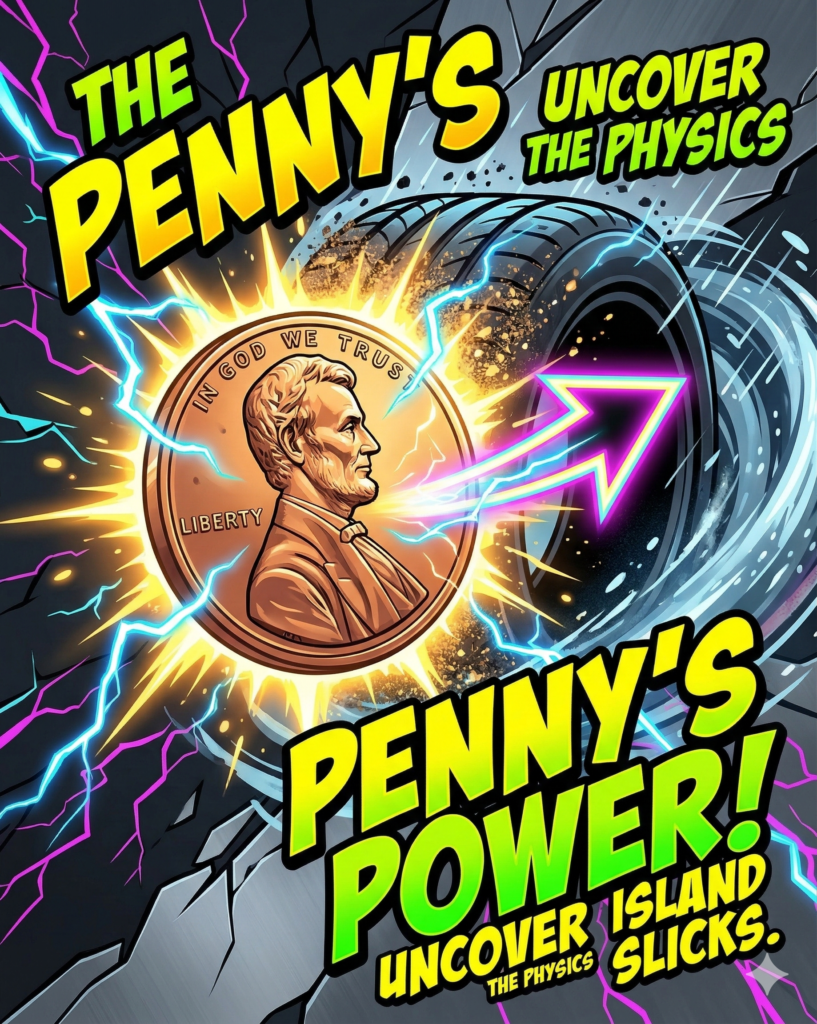
On St. Croix, our roads collect oil, dust, and salt film during the dry heat. When that first five-minute downpour hits, it creates a greasy “slick” that is twice as slippery as regular wet pavement. If you’re riding on 2/32″ of an inch (the top of Lincoln’s head), you aren’t driving anymore—you’re just a passenger.
The 1-Cent Insurance Policy
The VIPD is right: Grab a penny.
- Flip it: Lincoln’s head should be pointing down.
- Dip it: Stick it into your thinnest groove.
- Check it: If you can see the top of Abe’s hair, your tire is legally “bald” and a danger to everyone on the Queen Mary.
The Bottom Line: It’s cheaper to buy a tire today than to pay a deductible (or a hospital bill) tomorrow. Let’s keep the rubber side down, St. Croix.