
WASHINGTON (Reuters) — At 4:21 on Saturday morning, President Donald Trump sent a message on his Truth Social platform: the United States had carried out a daring mission to capture Venezuelan President Nicolas Maduro and his wife.
The action came as a surprise, but according to sources familiar with the matter, planning for one of the most complex U.S. operations in recent memory had been in the works for months and included detailed rehearsals.
Elite U.S. troops, including the Army’s Delta Force, created an exact replica of Maduro’s safe house and practiced how they would enter the strongly fortified residence.
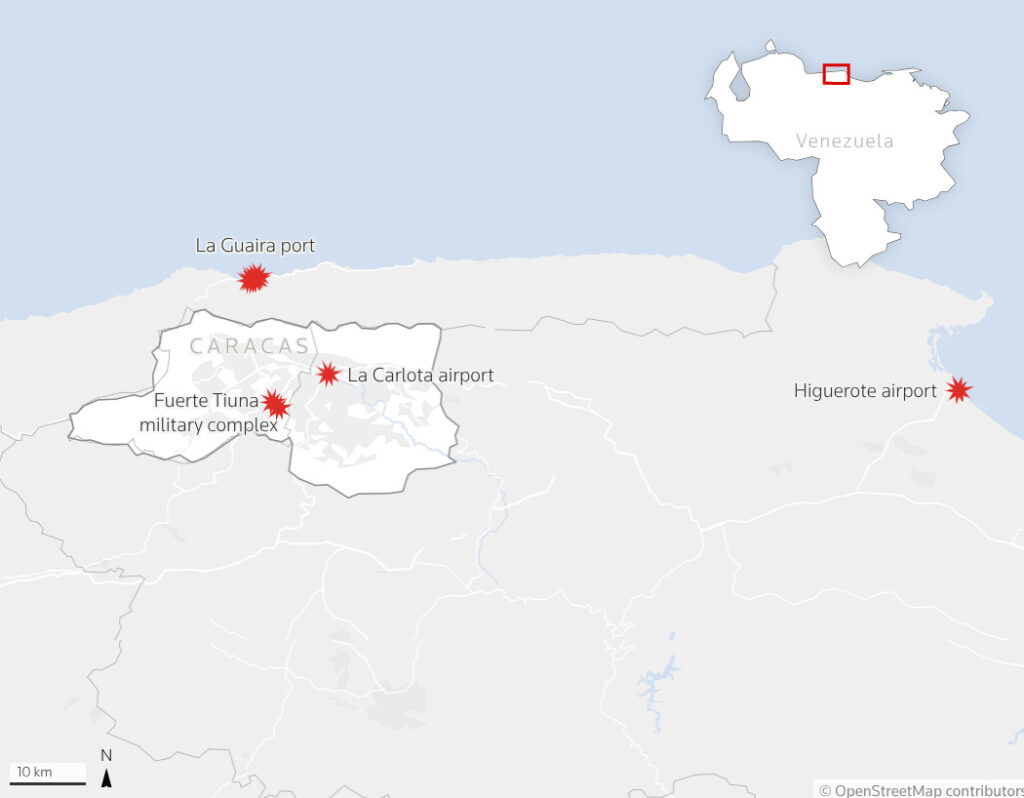
Source: Reuters reporting
The CIA had a small team on the ground starting in August who were able to provide insight into Maduro’s pattern of life that made grabbing him seamless, according to one source familiar with the matter.
Two other sources told Reuters the intelligence agency also had an asset close to Maduro who would monitor his movements and was poised to pinpoint his exact location as the operation unfolded.
With the pieces in place, Trump approved the operation four days ago, but military and intelligence planners suggested he wait for better weather and less cloud cover. At 10:46 p.m. EST on Friday, Trump gave the final go ahead for what would be known as Operation Absolute Resolve, Chairman of the Joint Chiefs of Staff General Dan Caine told reporters.
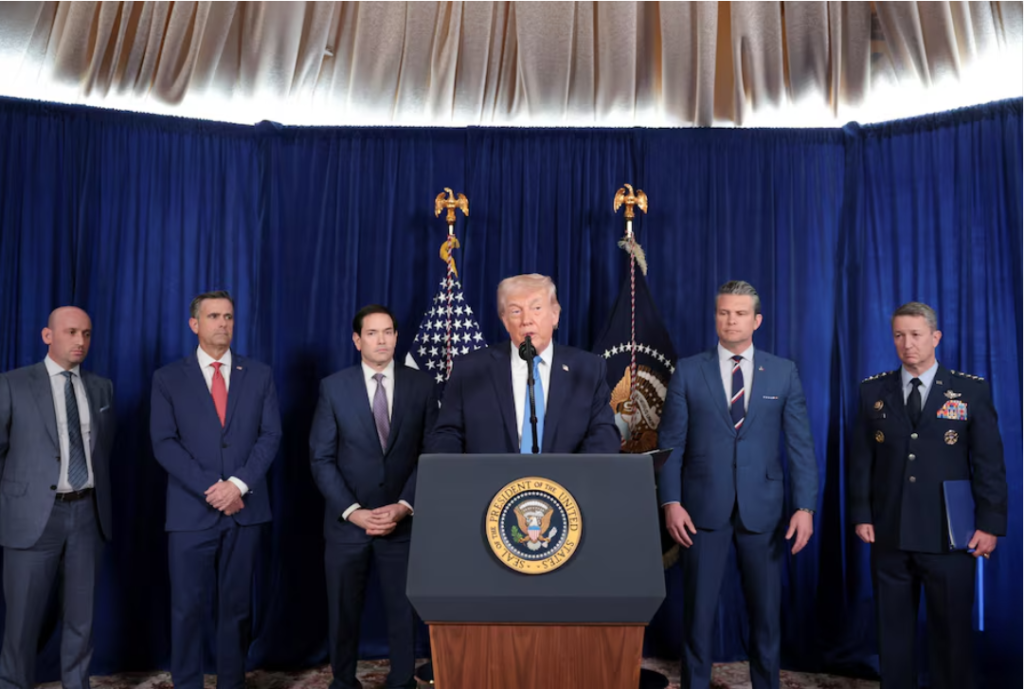
Trump, surrounded by his advisers at his Mar-a-Lago club in Palm Beach, Florida, watched a live stream of the events.
How the hours-long operation unfolded is based on interviews with four sources familiar with the matter and details Trump himself has revealed.
“I’ve done some pretty good ones, but I’ve never seen anything like this,” Trump said on Fox News just hours after the mission was completed.
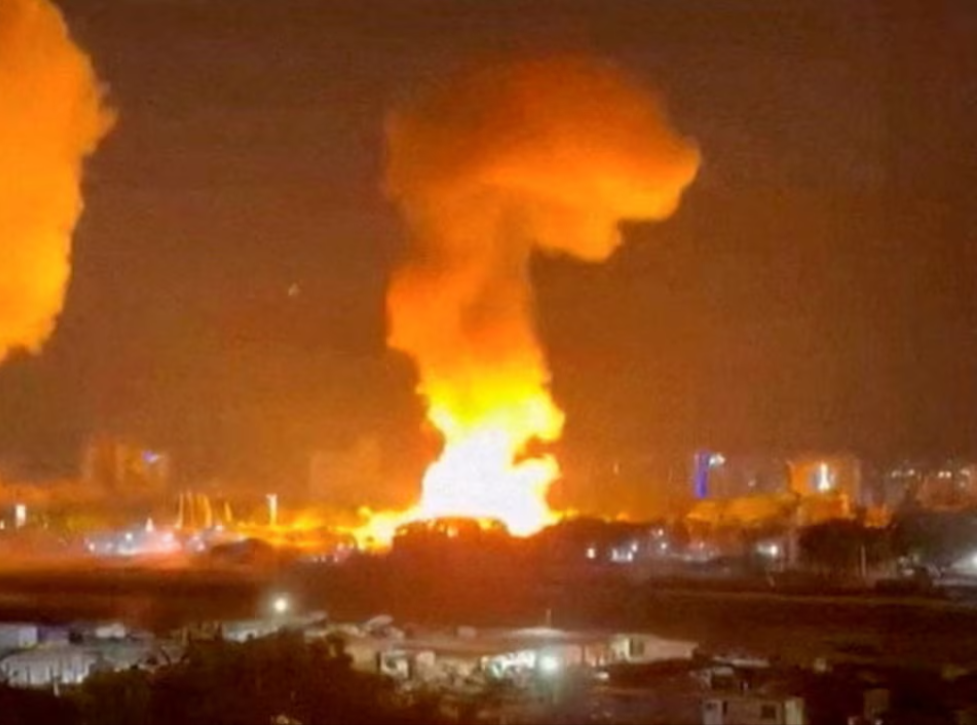
‘Massive Operation’
The Pentagon has overseen a massive military buildup of forces in the Caribbean, sending an aircraft carrier, 11 warships and more than a dozen F-35 aircraft. In total, more than 15,000 troops have poured into the region for what U.S. officials have long described as anti-drug operations.
According to one of the sources, Trump senior aide Stephen Miller, Secretary of State Marco Rubio, Defense Secretary Pete Hegseth and CIA Director John Ratcliffe formed a core team working on the issue for months with regular – sometimes daily – meetings and phone calls. They often also met with the president.
Late on Friday night and into early Saturday, Trump and his advisers huddled as a number of U.S. aircraft took off and carried out strikes against targets inside and close to Caracas, including air defense systems, according to a U.S. military official.
Caine said the operation involved more than 150 aircraft launched from 20 bases around the Western Hemisphere, including F-35 and F-22 jets, and B-1 bombers.
“We had a fighter jet for every possible situation,” Trump told Fox News Channel’s “Fox & Friends.”
Sources have told Reuters the Pentagon had also quietly moved into the region refueling air tankers, drones and aircraft specializing in electronic jamming.
U.S. officials said the airstrikes hit military targets. Images taken by Reuters at the La Carlota air base in Caracas showed charred military vehicles from a Venezuelan anti-aircraft unit.
With the strikes taking place, U.S. Special Forces made their way into Caracas heavily armed, including with a blowtorch in case they had to cut through steel doors at Maduro’s location.
Around 1 a.m. EST Saturday, Caine said, the troops arrived at Maduro’s compound in downtown Caracas while being fired upon. One of the helicopters was hit, but still able to fly.
Social media videos posted by residents showed a convoy of helicopters flying over the city at low altitude.
Once they reached Maduro’s safe house the troops, along with FBI agents, made their way into the residence, which Trump described as a “very highly guarded … fortress.”
“They just broke in, and they broke into places that were not really able to be broke into, you know, steel doors that were put there for just this reason,” Trump said. “They got taken out in a matter of seconds.”
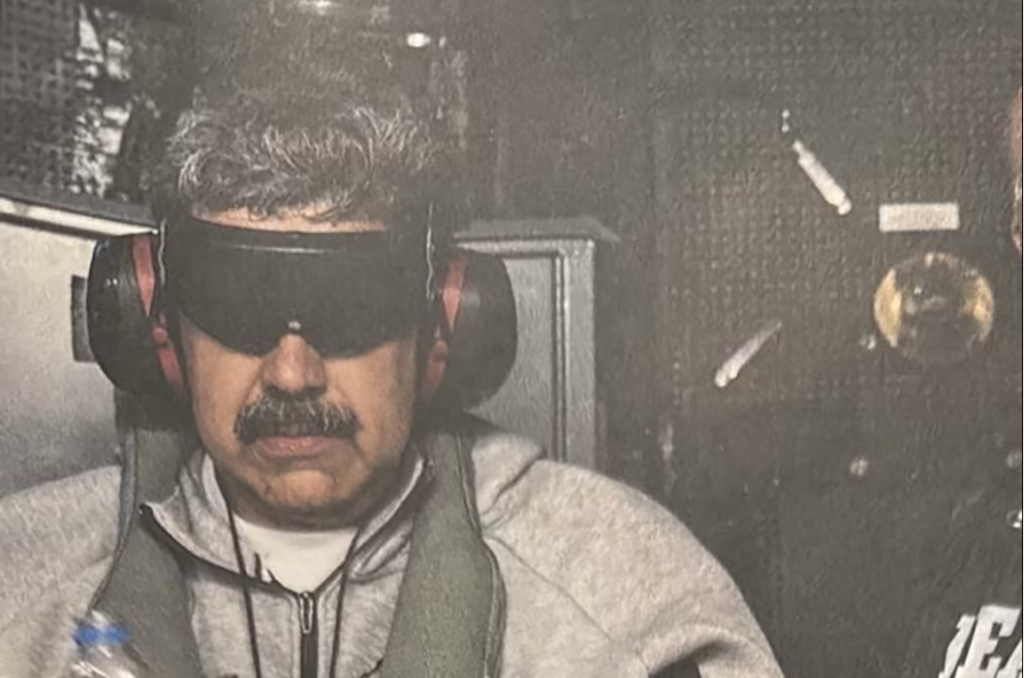
Maduro in custody
Once the troops were inside the safe house, Caine said, Maduro and his wife surrendered. Trump said the Venezuelan leader had tried to reach a safe room but was unable to close the door.
“He got bum rushed so fast that he didn’t get into that,” Trump said.
Some U.S. forces were hit, Trump said, but none were killed.
As the operation unfolded, Rubio started to inform lawmakers that it was underway. The notifications only began after the operation started and not before, as is customary for key lawmakers who play an oversight role, officials told Reuters.
As the troops left Venezuelan territory, Caine said, they were involved in “multiple self defense engagements.” By 3:20 a.m. EST, the helicopters were over water, with Maduro and his wife on board.
Almost exactly seven hours after Trump announced the operation on Truth Social, he made another post.
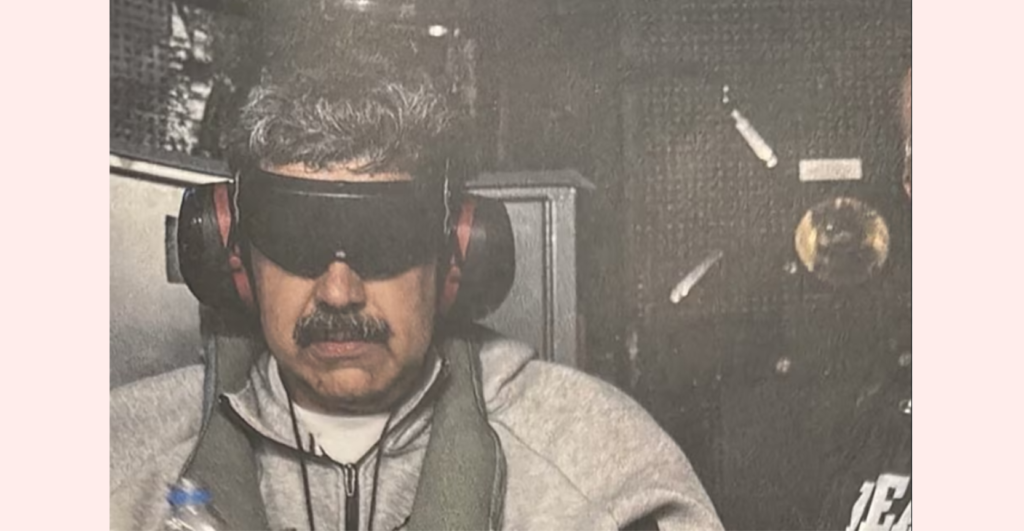
This time it was a photograph of the captured Venezuelan leader blindfolded, handcuffed and wearing grey sweatpants.
“Nicolas Maduro on board the USS Iwo Jima,” Trump wrote, referring to the amphibious assault ship.
By REUTERS
Reporting by Idrees Ali, Erin Banco, Steve Holland and Phil Stewart; Editing by Don Durfee and Daniel Wallis
Our Standards: The Thomson Reuters Trust Principles.
EDITOR’S NOTE: The capture of Nicolás Maduro by U.S. special forces on Saturday, January 3, 2026, has sparked a massive debate among legal scholars, with many arguing that the operation constitutes a clear violation of international law, while the U.S. government maintains it acted within its rights to bring a “criminal” to justice.
Under international law, the primary issue is not the “kidnapping” itself, but the unilateral use of military force on the sovereign territory of another nation.
The Case for Violation of International Law
Most international legal experts and the United Nations point to three main reasons why the operation, named Operation Absolute Resolve, likely violates international standards:
- Violation of Sovereignty (UN Charter Article 2(4)): This article prohibits the use of force against the “territorial integrity or political independence” of any state. By launching airstrikes and sending Delta Force into Caracas without a UN Security Council mandate or an invitation from the Venezuelan government, the U.S. bypassed the foundational rules of global order.
- Lack of “Self-Defense” Justification: For a unilateral strike to be legal, a country must be acting in self-defense against an “imminent armed attack.” Critics argue that drug trafficking (the basis of the indictment) does not constitute an “armed attack” by a state that justifies a full military invasion and extraction.
- Head of State Immunity: Traditionally, sitting heads of state are granted absolute immunity from the jurisdiction of foreign courts (the ratione personae doctrine). By seizing a sitting president, the U.S. ignored a custom intended to prevent nations from using their domestic courts to topple foreign rivals.
The U.S. Legal Counter-Argument
The Trump administration and U.S. Department of Justice argue the capture is legal under U.S. domestic law, using precedents that separate the “method of capture” from the “right to try” the defendant:
- Non-Recognition of Legitimacy: The U.S. does not recognize Maduro as the legitimate president of Venezuela (following the disputed 2024 elections). Legally, the U.S. argues he is a private citizen and a “fugitive” rather than a sovereign head of state, thus stripping him of immunity.
- The Ker-Frisbie Doctrine: Under U.S. law, the “Ker-Frisbie” rule (and the later United States v. Alvarez-Machain case) establishes that a court’s jurisdiction to try a defendant is not impaired by the fact that they were brought into the country via forcible abduction or “kidnapping.” Essentially, U.S. courts care that you are there, not how you got there.
- Narcoterrorism Indictment: Attorney General Pam Bondi has emphasized that the 2020 and 2026 indictments classify Maduro as the leader of the “Cartel of the Suns,” framing the military action as a law enforcement operation against a transnational criminal enterprise.
Historical Precedents
The situation is being compared to two previous U.S. operations:
- Manuel Noriega (1989): The U.S. invaded Panama to capture Noriega on drug charges. Noriega’s lawyers argued the arrest was illegal, but U.S. courts rejected the claim, partly because the U.S. did not recognize his government.
- Humberto Alvarez-Machain (1990): The DEA kidnapped a Mexican doctor and brought him to Texas. The Supreme Court ruled in 1992 that even though the kidnapping might be “shocking,” it did not violate the extradition treaty or prevent him from standing trial.
Status Today: Maduro and his wife, Cilia Flores, are currently held at the Metropolitan Detention Center (MDC) in Brooklyn. They are expected to be arraigned in a Manhattan federal court tomorrow, Monday, January 5, where his defense team is certain to file motions to dismiss based on “outrageous government conduct.”