
 John McCarthy
By JOHN McCARTHY / V.I. Free Press Reporter
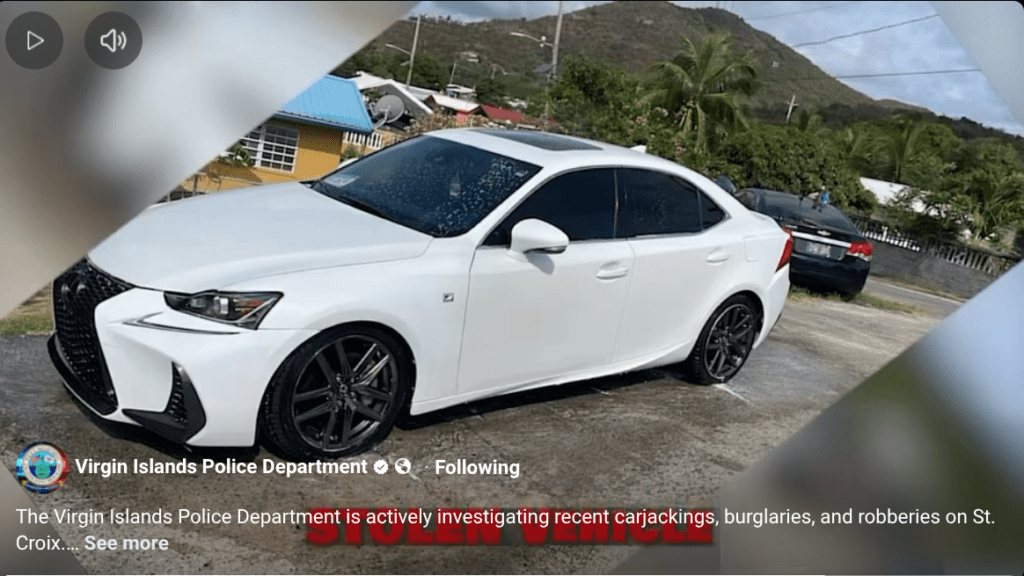
ST. CROIX — When the top command of the Virgin Islands Police Department stood before microphones to address a recent high-end carjacking on St. Croix, they did more than deliver poor tactical advice—they insulted the intelligence of every driver from Christiansted to Frederiksted.
The official directive issued to the public was clear: if a driver encounters an obstacle like a tire placed deliberately in the road, they should stop, execute a multi-point turnaround, and call 911 while driving away in the opposite direction.
This command is not merely logistically absurd; it is tactically dangerous.
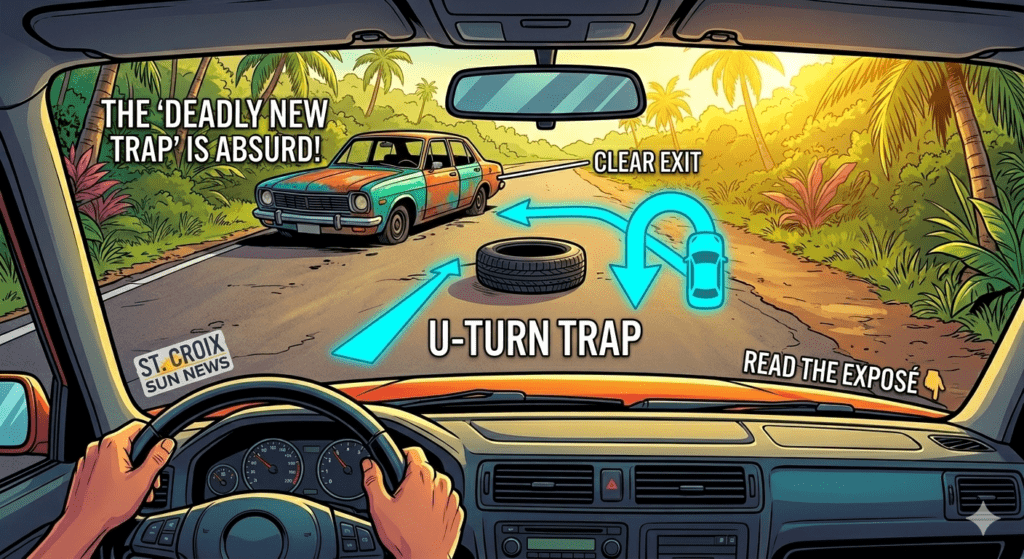
Dismantling the ‘Turnaround Trap’
A standard vehicle tire sitting on a yellow centerline leaves ample, unobstructed clearance on both sides of a standard two-way territorial road. A driver maintaining basic situational awareness can safely navigate around such an obstruction without stopping. To suggest that a motorist is trapped by a single piece of rogue rubber defies basic physics.
By instructing drivers to halt their vehicles and execute a frantic multi-point turnaround in tight, shoulderless corridors, the VIPD is actively manufacturing a lethal bottleneck. For those stationary seconds, a driver becomes an immobilized target—trapped in the exact tactical window an armed ambush requires.
Prominent community voices quickly countered the department’s textbook theories with raw, street-level survival logic: lock the doors, maintain forward momentum, and clear the area immediately. In a fast-moving crisis, horsepower and continuous movement preserve life; waiting on a jammed dispatch queue while stationary does not.

The Ghost of Past Ambushes
The community’s immediate skepticism is well-grounded in collective memory. Longtime St. Croix residents recall the predatory highway robbery syndicates that operated on dark stretches of the territory’s roads decades ago. Those operations relied entirely on getting a victim to brake, hesitate, and stop for an apparent hazard. The moment the vehicle became stationary, suspects emerged from the roadside brush. By advising citizens to voluntarily drop themselves back into a stationary trap, the VIPD is ignoring established historical criminal patterns.
The Red Herring: Investigative Anomalies
Because the physical reality shows that any regular driver can—and should—simply bypass such an obstruction, it forces a massive investigative question into the sunlight: Why has a singular property crime involving a late-model luxury import triggered an unprecedented emergency mobilization from the department’s highest command?
Everyday citizens dealing with rampant local burglaries are routinely told to be patient while facing severe delays in police response. Yet, the disappearance of a single white Lexus has sent the top brass into a tailspin. The math does not add up.
In regional illicit trade networks, high-value luxury assets frequently circulate as currency or collateral. When such an asset vanishes, immense pressure is often exerted to locate it immediately before retaliatory actions occur. The public has a right to ask a critical question: Is the VIPD using a public safety press conference as a smoke screen to act as an accelerated asset-recovery service, or is there a legitimate public safety crisis they are refusing to fully disclose?
A Need for Federal Scrutiny and Professional Standards
Because armed carjacking carries strict federal penalties, the FBI and the U.S. Attorney’s Office maintain immediate, concurrent jurisdiction in the territory. Given the deep shadow of public corruption that recently culminated in the federal bribery conviction of former Police Commissioner Ray Martinez, the public is entirely justified in questioning the transparency of this investigation.
The VIPD owes the hard-working people of the Virgin Islands an accounting. The department must move away from generic public relations statements and address the tactical flaws in its public safety advice. Furthermore, the administration must commit to active, visible community policing—such as foot patrols along vital commercial corridors like the Christiansted Boardwalk—rather than remaining isolated behind the tinted windows of climate-controlled SUVs while the community demands real transparency.
The independent press is watching, and federal oversight remains constant. The VIPD must abandon the smoke and mirrors, disclose the true context of this investigation, and provide the territory with the professional, transparent law enforcement it deserves.
