 John McCarthy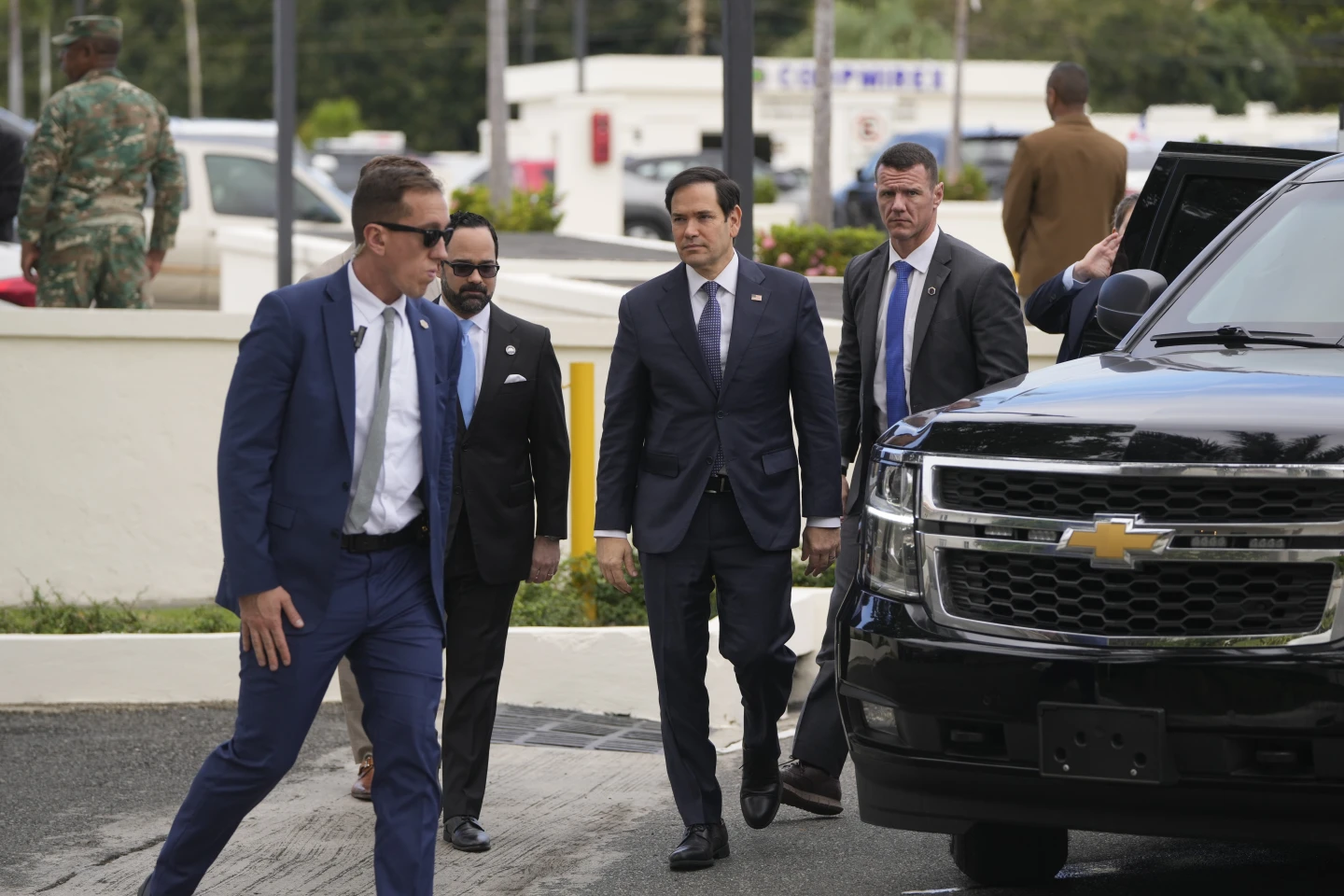
SANTO DOMINGO (AP) — The Trump administration plans to seize a second plane belonging to Venezuelan President Nicolás Maduro ’s government that is currently in the Dominican Republic.
Secretary of State Marco Rubio intends to announce the seizure on Thursday during a visit to Santo Domingo, the last stop of his five nation tour of Central America, according to a U.S. official familiar with the matter and a State Department document obtained by The Associated Press.
Carrying out the seizure required that Rubio sign off on a foreign aid freeze waiver request to pay more than $230,000 in storage and maintenance fees. It also required approval by the Department of Justice.
That waiver request, submitted early last week, has been approved and Rubio is expected to make the announcement at what the State Department has described publicly as only a “law enforcement engagement.”
The plane is a Dassault Falcon 200 that has been used by Maduro and top aides, including his vice president and defense minister to travel the world, including Greece, Turkey, Russia and Cuba, in what the administration says are violations of U.S. sanctions, according to the document.
The seizure of the plane comes just a week after President Donald Trump’s envoy for special missions, Richard Grenell, visited Caracas and met with Maduro to discuss the repatriation of Venezuelan nationals who illegally entered the United States. Grenell returned with six Americans who had been detained in Venezuela.
The U.S. seized another of Maduro’s planes from the Dominican Republic in September 2024.
At the time, the Justice Department said Maduro associates in late 2022 and early 2023 used a Caribbean-based shell company to hide their involvement in the purchase of the plane — a Dassault Falcon 900EX valued at $13 million — from a company in Florida.
In a development related to Rubio’s first stop on the Central American tour, Panama, the State Department announced Thursday that the Panamanians had agreed to allow US warships to transit the Panama Canal without charge.
Those fees had been one focus of President Donald Trump’s complaints about the canal, which he has said will retake from Panama unless it severely limits Chinese influence in the area.
“U.S. government vessels can now transit the Panama Canal without charge fees, saving the U.S. government millions of dollars a year,” the department said in a post on X.
An agreement in principle to drop the fees had been reached when Rubio visited Panama o n Sunday, but it had not been finalized.
By MATTHEW LEE/Associated Press
