
 John McCarthy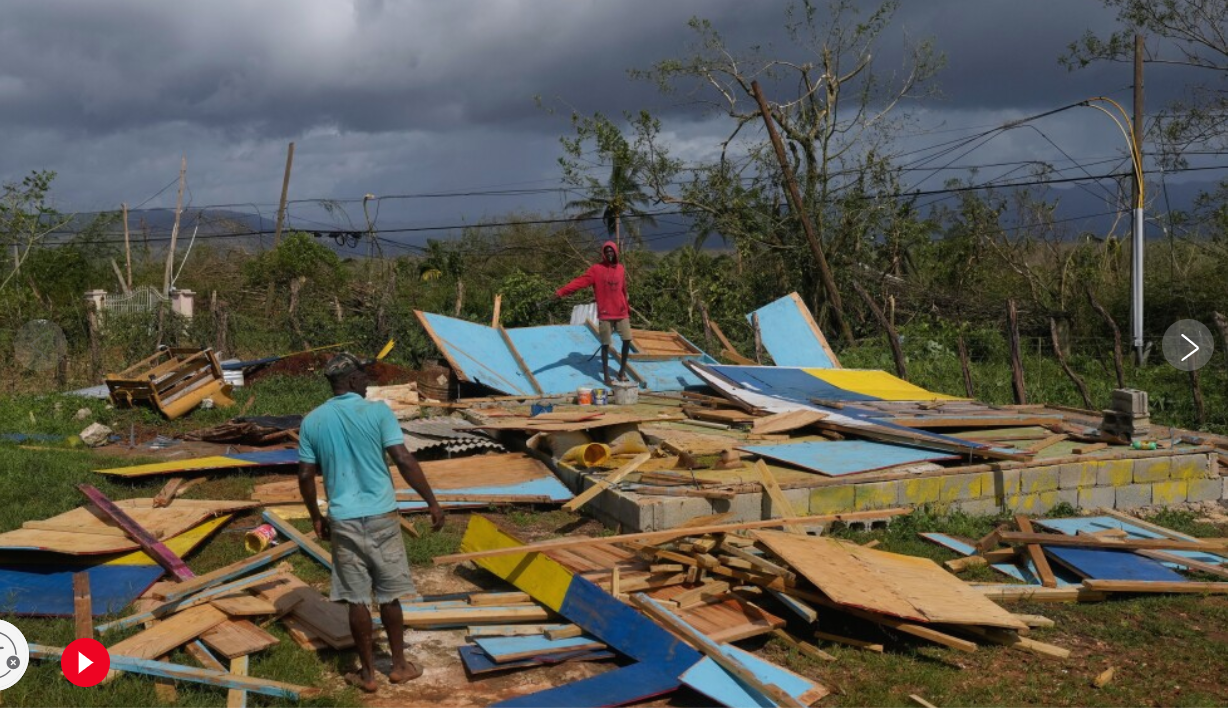
By: Virgin Islands Free Press News Desk
ST.CROIX — The drone of heavy excavators, the scream of chain saws, and the rhythmic chop of machetes echoed across the northern Caribbean this week as emergency crews and survivors began the grueling task of clearing debris following the passage of Hurricane Melissa.
The monster storm—which slammed into Jamaica as a rare Category 5 hurricane before carving a path of destruction through eastern Cuba and unleashing fatal flash floods across Haiti—has left tens of thousands homeless and entire municipal power grids shattered.
Jamaica: ‘Ground Zero’ at Black River
In southwest Jamaica, where Melissa made direct landfall with catastrophic 185 mph winds, officials are confronting an unprecedented infrastructure crisis.
Prime Minister Andrew Holness confirmed that in the coastal town of Black River—described by government leadership as “ground zero”—up to 90 percent of all residential and commercial roofs were ripped away by the storm’s eyewall.
“The devastation is enormous,” said Jamaican Transportation Minister Daryl Vaz, noting that relief flights have only recently begun touching down at major airports to drop off emergency food, clean water, and temporary shelter kits.
More than 25,000 residents across Jamaica remain packed into emergency shelters, with over three-quarters of the island stripped of electrical power.
Haiti: Fatal Flooding and Rising Death Toll
Across the passage in Haiti, Melissa’s outer bands triggered catastrophic mountain runoff and mudslides. Civil protection authorities report at least 25 people dead and nearly 20 others missing, with the heaviest casualties concentrated in the southern peninsula.
In the town of Petit-Goâve, local emergency directors confirmed at least 20 fatalities—including 10 children—after rising floodwaters tore through residential neighborhoods.
Laurent Saint-Cyr, president of Haiti’s transitional presidential council, warned that the death toll is expected to rise sharply as search-and-rescue teams penetrate isolated rural communities previously cut off by washed-out roads and collapsed bridges.
Cuba: Massive Evacuations Avert Mass Casualties
In eastern Cuba, heavy military machinery and civilian brigades worked side-by-side to clear blocked thoroughfares in Santiago de Cuba, Granma, and Holguín.
While no immediate fatalities were reported in Cuba—thanks in large part to the pre-storm evacuation of more than 735,000 residents from high-risk flood zones—the economic impact on the island’s infrastructure is severe.
Government officials reported widespread destruction of electrical distribution lines, fiber-optic communications cables, and the total loss of major banana, cassava, and coffee crops across the eastern provinces.
Emergency management agencies across the Caribbean basin continue to coordinate international disaster relief distributions as regional governments calculate the multi-billion-dollar price tag of the recovery effort.
