
 John McCarthy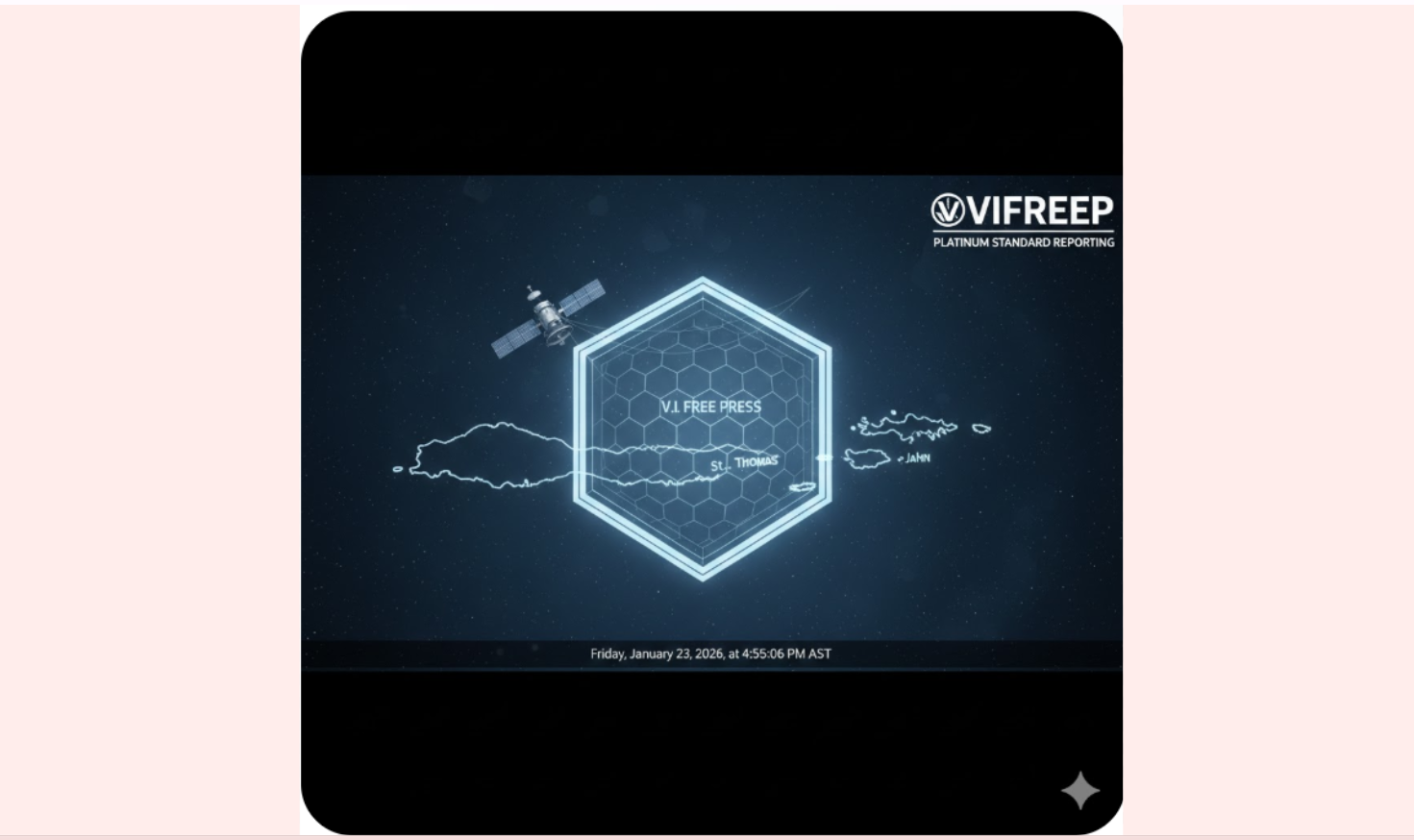
ST. CROIX — As President Trump challenges world leaders at the World Economic Forum in Davos this week, the “Golden Dome” has moved from a campaign promise to a trillion-dollar reality. For residents of the U.S. Virgin Islands, the big question isn’t about the cost to Canada—it’s about the safety of our own shores.
Here is what the V.I. Free Press has decoded about the Golden Dome’s plan for the territories:
1. What is the ‘Golden Dome’?
Unlike regional systems like Israel’s Iron Dome, which uses ground-based launchers to protect a city, the Golden Dome is a “Space-Based” network. It uses thousands of satellites (Space Force) and hypersonic interceptors to “catch” missiles the moment they leave the ground—thousands of miles before they ever reach the Caribbean.

2. The ‘Guam Blueprint’ for the USVI
This month (January 2026), the administration began the first major territorial rollout of Golden Dome technology in Guam.
- The Strategy: Guam is being used as the “test case” to prove that the Dome can protect island territories that are far away from the U.S. mainland.
- The Benefit for USVI: Whatever works in the Pacific is planned for the Atlantic. As a U.S. territory, the USVI is legally defined as part of the “Homeland” that the Department of War is mandated to protect.

3. Why the USVI is a ‘Strategic Anchor’
In the new defense architecture, the USVI isn’t just a place to be protected; it’s a place that helps protect.
- Tracking Sensors: The “Dome” relies on “Fire-Control Quality” data. Strategic locations like St. Croix could potentially host the next generation of Long Range Discrimination Radars (LRDR), turning the islands into the “eyes” of the Atlantic.
- Homeland Priority: While Canada is being told they must “pay their share” ($61 billion), U.S. territories are covered under the $25 billion initial funding already passed in the “One Big Beautiful Bill Act.”
