 John McCarthy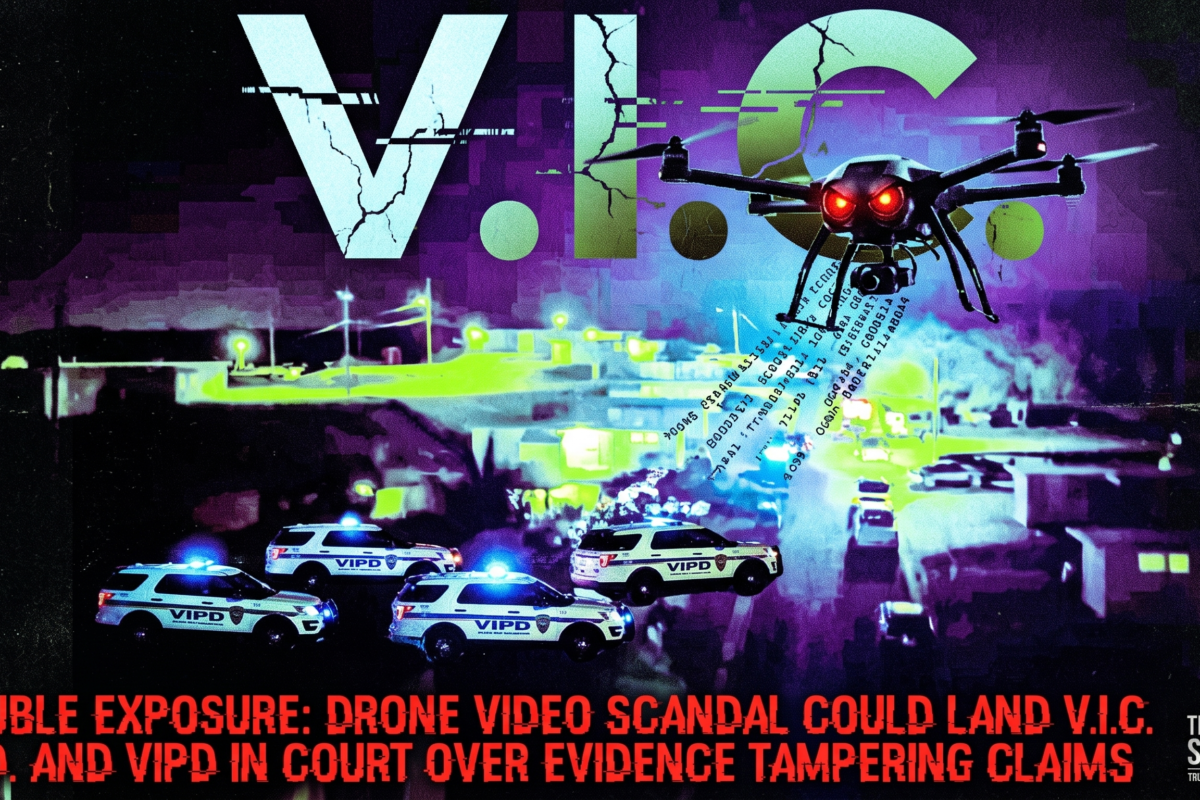
Drone Video Scandal Erupts for VIC and VIPD Raising Questions About Evidence Tampering and Due Process Violations
By VIRGIN ISLANDS FREE PRESS EDITORIAL BOARD
ST. CROIX — A homicide scene under United States jurisdiction is meant to be a sanctuary of forensic integrity. It is a strictly controlled perimeter where the rules of evidence, constitutional due process, and a meticulous chain of custody govern every square inch of ground. Its sole purpose is the pursuit of unassailable justice for the victims of violent crime.
It is not a television soundstage. It is not a collaborative content-creation studio. And it is certainly not an exclusive sandbox for preferred corporate media houses to harvest prime-time social media clicks.
Yet, following a tragic string of homicides across the territory this week, the systemic boundary between professional law enforcement and private media favoritism did not merely blur—it completely collapsed.
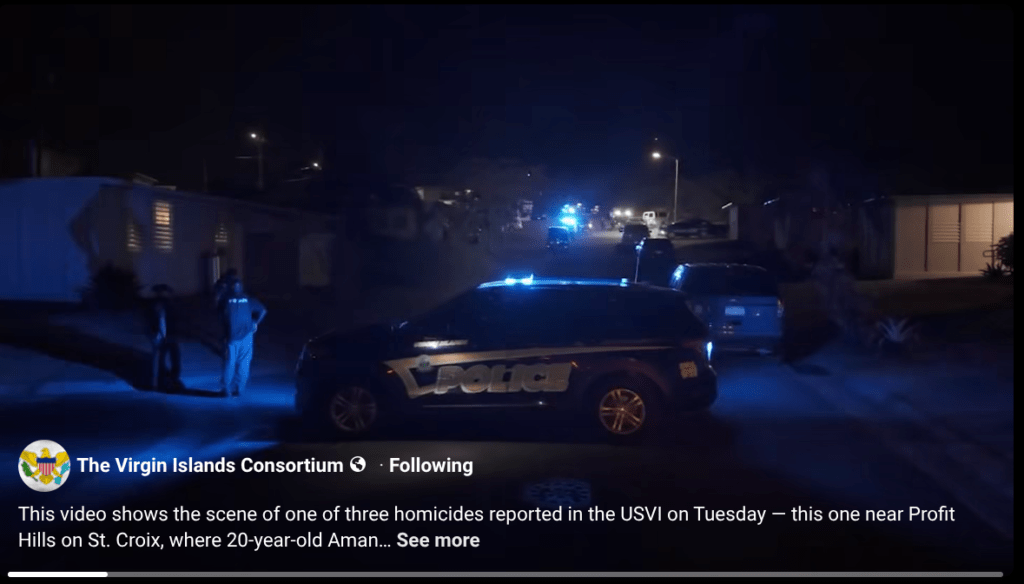
The immediate broadcast of high-fidelity aerial drone footage from deep inside an active tactical perimeter raises profound, alarming questions about the management of the Virgin Islands Police Department (VIPD) under St. Croix District Police Chief Uston Cornelius and Communications Director Glen Dratte. For a community demanding transparent, fair, and unbiased reporting, the visual receipts on display present a structural crisis that goes far deeper than a mere media “scoop.”
The Illusion of Absolute Power
There is an old maxim, famously articulated by Lord Acton, that warns: “Absolute power corrupts, absolutely.”
When a private media entity operates with such seamless, unparalleled proximity to the forces and machinery of the state that it can deploy aircraft directly alongside marked police cruisers within an active homicide zone, the public interest is immediately compromised. It fosters an environment where institutional favoritism supplants public duty, creating the appearance of an exclusive pipeline designed to feed a single corporate entity at the expense of independent journalism and constitutional parity.
Under the First Amendment, the rules of equal access are absolute. Law enforcement brass cannot pick and choose which corporate media favored sons receive unprecedented, hands-on access to restricted tactical zones while shutting out the rest of the independent press corps. When VIPD leadership treats public access as a currency to be traded for favorable prime-time real estate, they undermine the very credibility of the department.
Shattering the Chain of Evidence
The far more devastating crisis, however, rests squarely within the territory’s judicial system. A defense attorney’s greatest asset is structural ambiguity, and the VIPD brass has just handed the criminal defense bar a massive, wide-open window to challenge the integrity of state evidence.
Consider the reality of digital evidence in a modern courtroom. Under standard criminal procedure and the Federal Rules of Evidence, data captured at a crime scene must be meticulously accounted for from the fraction of a second it is recorded to the moment it is logged into a secure forensic vault.
Instead, the territory witnessed a radical visual dislocation in the publicly broadcast footage—an instantaneous warp from a low-altitude horizontal sweep to a high-altitude tactical overhead perspective. In the context of “direct-to-dockets” fact-finding, this visual seam exposes two equally damning procedural realities:
- The Technical Telemetry Lag: If this radical shift is the result of a sudden transmission glitch or live-stream signal drop between the aircraft and the recording device, it establishes that a private media entity was broadcasting a live, unbuffered, and completely unmonitored video feed directly from the interior of an active, restricted tactical perimeter. Broadcasting the real-time movements and positions of first responders during a volatile homicide investigation poses an immediate security risk to officers on the ground and compromises the operational security of the scene.
- The Editorial Jump Cut: Conversely, if this visual seam represents a manual edit spliced together in a production booth, it indicates that raw video captured inside a secured crime scene was extracted, manipulated, and formatted by a private corporate entity to package the footage for social media prime time. Under standard U.S. criminal procedure and the Federal Rules of Evidence, the introduction of a third-party editing process before the raw data is secured in an official law enforcement forensic vault effectively shatters the chain of custody, potentially handing defense attorneys a massive window to challenge the admissibility of scene documentation.
Treating a serious crime scene with the casual oversight of a boutique content house isn’t just bush-league media strategy; it is a procedural catastrophe that risks contaminating the evidentiary pool of a major prosecution.
Crossing the Line into Federal Jeopardy
What local officials fail to realize is that this administrative farce does not stop at the territorial border. Because the U.S. Virgin Islands operates under the framework of the United States Constitution, this collaborative escapade exposes both the VIPD and its media partners to severe federal liabilities.
First, under the Federal Aviation Administration (FAA), the regulations governing Small Unmanned Aircraft Systems (Part 107) are incredibly strict regarding active emergency response efforts. Operating a private drone low to the ground inside an active law enforcement perimeter—directly over the heads of first responders and moving vehicles—without rigorous, documented federal waivers is a direct violation of federal aviation law. If the VIPD authorized an outside entity to buzz an active tactical zone for commercial broadcasting, they did not just violate local protocol; they actively facilitated a federal breach.
Second, the structural contamination of evidence crosses directly into Federal Due Process violations. Under the Fourteenth Amendment, a defendant has an absolute right to a fair trial, which mandates that the state preserve the absolute integrity of forensic data. By allowing a private corporation to handle, manipulate, or live-stream evidentiary data from a homicide scene before it is legally logged, the VIPD introduces systemic “reasonable doubt.” If this procedural recklessness causes a local prosecution to collapse, it opens the door for federal civil rights lawsuits and mandates intervention from federal oversight bodies, including the U.S. Department of Justice.
A Direct Challenge to the Attorney General
This is no longer a localized public relations dispute. This is a systemic challenge to the legal standards of the United States Virgin Islands.
Attorney General Gordon Rhea possesses an elite academic background and decades of serious, high-stakes legal experience. He knows exactly how a compromised crime scene and a broken chain of custody can completely unravel a homicide case before it ever reaches a jury. While the local political establishment may prefer to look the other way when local favoritism interferes with protocol, the cold reality of federal due process and constitutional mandates cannot be ignored.
The VIPD may think they are slick. They may celebrate short-lived prime-time engagement statistics, completely oblivious to the high-stakes legal minefield they have walked into. But when the dust settles, a territorial justice system cannot survive if its law enforcement machinery is treated as a collaborative asset for private corporate interests.
The St. Croix Sun News will continue to shine a bright, unwavering light of transparency on these backroom arrangements. The truth is the truth, and it is time for the VIPD to remember that their allegiance belongs to the law, to justice, and to the entire public—not to the corporate media pets operating inside their perimeters.
The brass should shut their content studios down, step away from the editing booths, and start doing the real, disciplined work of law enforcement before their operational vanity lands an entire investigation in the hooscow.