 John McCarthy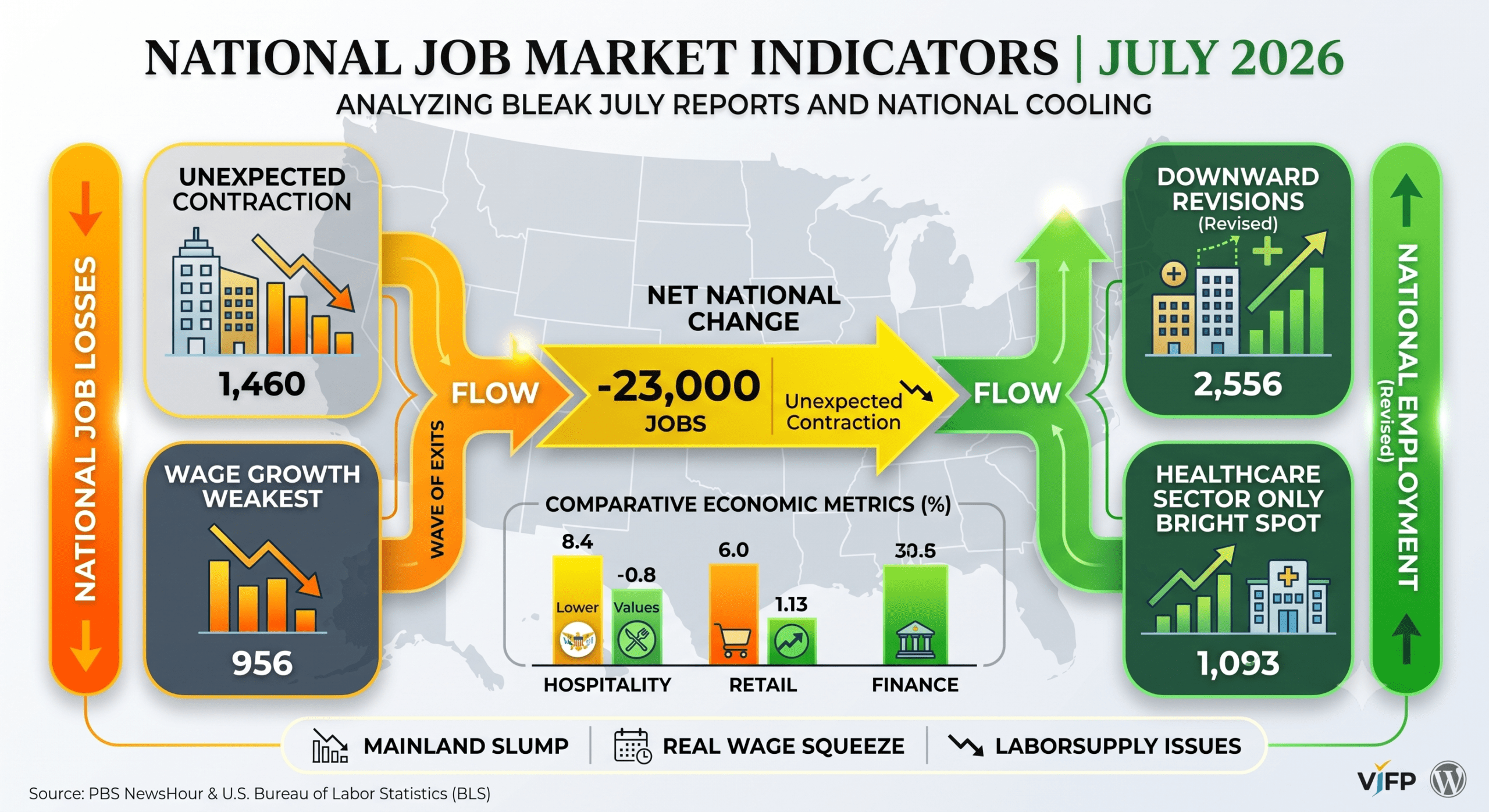
By: Virgin Islands Free Press News Desk
The Mainland Shock: July by the Numbers
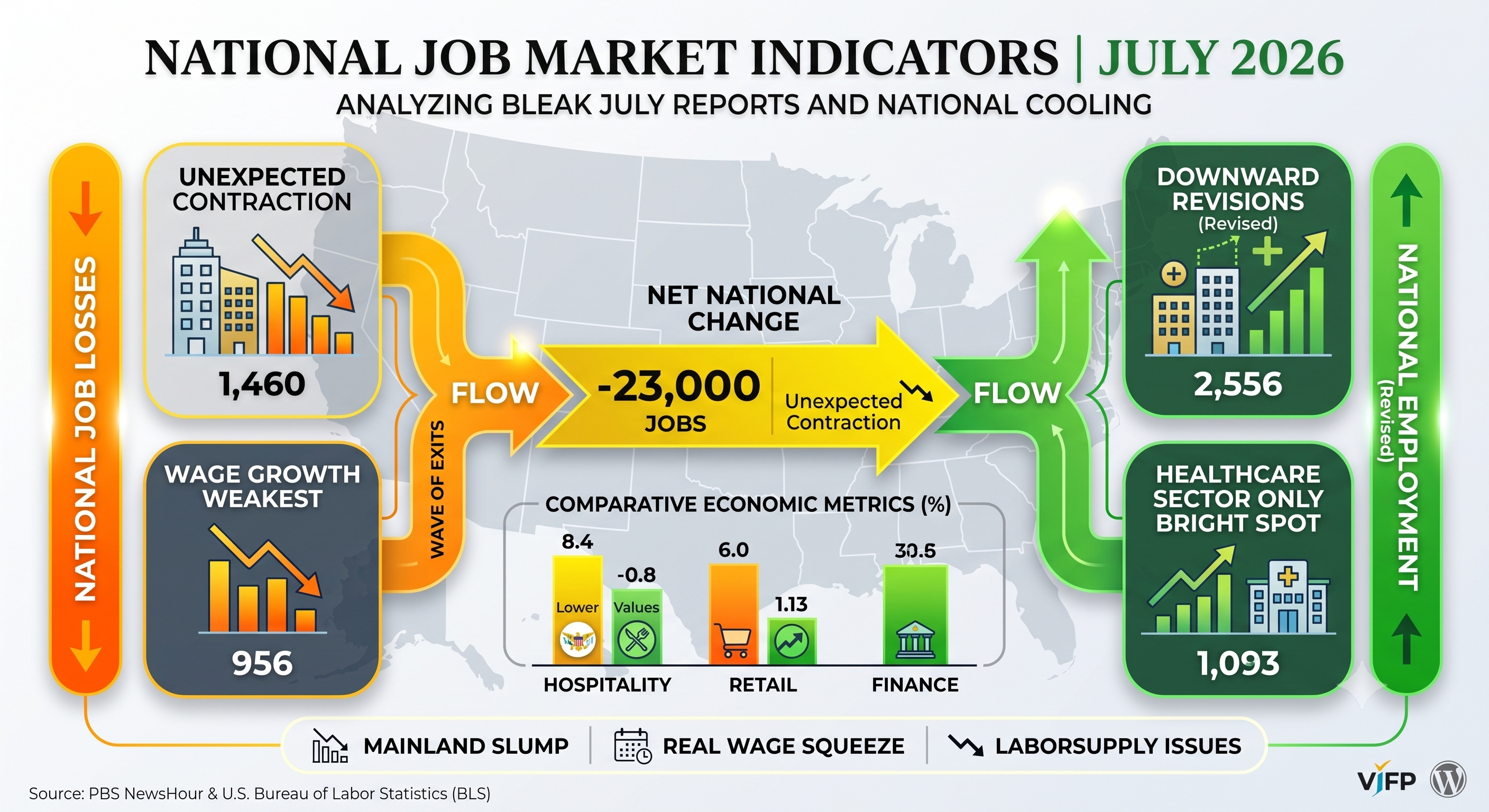
While economists anticipated modest national growth for mid-summer, the Bureau of Labor Statistics delivered a stark wakeup call in its July jobs report: the U.S. economy lost 23,000 net jobs. Compounding the disappointment, previous employment figures for May and June were quietly revised downward by a combined 103,000 positions.
While national unemployment dipped slightly from 4.2% to 4.1%, analysts note that this was largely driven by a shrinking overall labor force as discouraged workers and retiring baby boomers stepped to the sidelines, bringing national labor force participation to five-year lows.
========================================================================
NATIONAL JULY JOBS REPORT AT A GLANCE
========================================================================

  NET JOB CHANGE            : -23,000 jobs (Unexpected contraction)
  2-MONTH DOWNWARD REVISIONS: -103,000 jobs (May & June combined)
  UNEMPLOYMENT RATE         :  4.1% (Driven by labor force exits)
  WAGE GROWTH               :  3.2% annualized (Weakest in 5 years)

========================================================================
Key National Stress Points & The USVI Connection
National macroeconomic shifts rarely stay contained on the mainland. Given the territory’s heavy reliance on external supply chains, air travel, tourism revenues, and federal alignment, four specific takeaways from the July national report carry direct relevance for the Virgin Islands:
1. The Hospitality Slump & Tourist Spending Squeeze
In a rare mid-summer reversal, the national hospitality and retail sectors posted net job losses. Chief economists attribute the pullback to an ongoing “affordability crisis”—American families, squeezed by persistent inflation and stagnant real wage growth (now down to a 5-year low of 3.2%), are cutting back on discretionary spending and dining out.
- The Island Relevance: The USVI tourism sector operates at the tip of the spear of mainland discretionary income. When American households trim leisure travel budgets or shorten vacations, island hotels, excursion operators, and local restaurants feel the ripple effect almost immediately.
2. Labor Supply Pressures & Immigration Policy
The national report highlighted significant labor supply contraction in services and hospitality, influenced in part by tightening federal immigration enforcement and reduced foreign-born labor participation.
- The Island Relevance: USVI service and construction sectors regularly navigate localized labor shortages. Shifts in federal immigration enforcement and visa processing directly impact the pool of available temporary and seasonal workers needed for major commercial developments, disaster recovery rebuilds, and resort operations.
3. Divergence in Growth Sectors (Tech/Data vs. Island Realities)
The few bright spots in the national July report were hyper-concentrated in healthcare (driven by aging demographics) and heavy commercial construction tied to the mainland artificial intelligence and data center boom.
- The Island Relevance: While mainland construction is riding high on tech infrastructure projects, island construction faces an entirely different set of variables—primarily shipping delays, utility grid reliability, and high material freight costs. The territory cannot easily ride national construction tailwinds without fixing core localized infrastructure bottlenecks first.
4. Squeezed Household Budgets & Real Wages
National wage growth slows to 3.2% means that inflation is effectively erasing pay raises for average workers. When mainland consumers feel financially pinched, their price sensitivity increases across the board.
- The Island Relevance: High ocean freight tariffs and electricity rates mean island retail and grocery prices remain elevated. If mainland visitors have less real purchasing power, local merchants may see lower per-capita spending even during high-occupancy travel windows.
Macro Summary: A Shared Need for Retention
The national July report mirrors the structural realities captured in the latest territorial data: growing a modern economy depends far more on retaining existing businesses and workers than on hoping for speculative windfalls.
Just as mainland employers are clinging to core talent while freezing new hiring, USVI policymakers and commercial leaders must focus on stabilizing high local operating costs to help territory employers weather broader national economic turbulence.