
 John McCarthy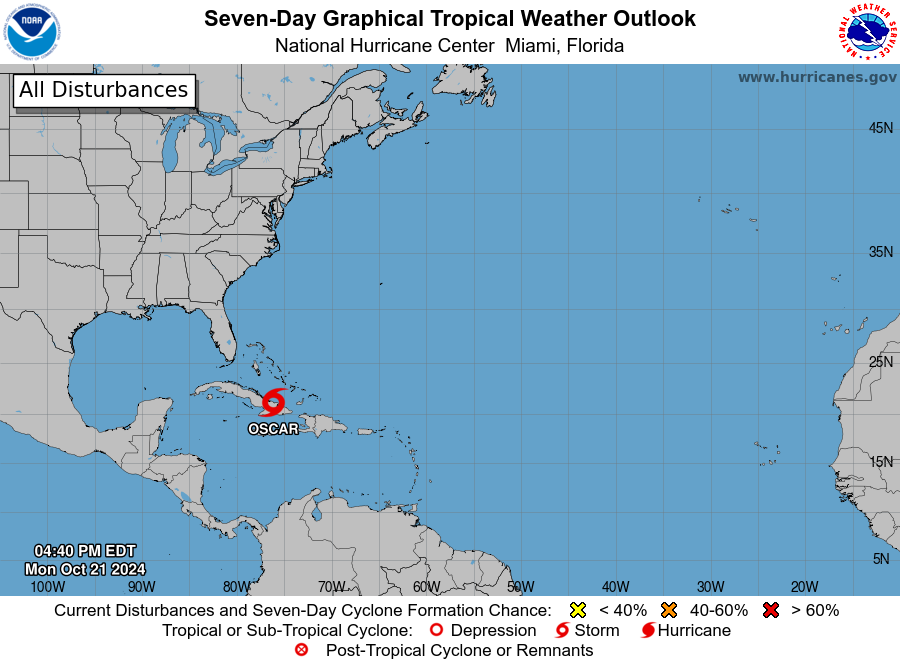
HAVANA — Tropical Storm Oscar brought heavy rains and winds to Cuba, an island already beleaguered by a massive power outage, late Sunday after brushing the Bahamas.
It made landfall as a Category 1 hurricane with maximum sustained winds of 75 mph in the eastern Cuban province of Guantanamo, near the city of Baracoa, on Sunday evening. Oscar had weakened to a tropical storm with 70 mph winds by late Sunday, the U.S. National Hurricane Center said.
The storm was 40 miles east of Guantanamo moving west-northwest at 6 mph.
Thunderstorms and rain, along with moderate flooding in low-lying areas, were reported in the country’s eastern provinces. Cuban media said 2-meter (6.5-feet) swells were hitting the coast and roofs and walls in Baracoa had been damaged. Authorities have set up 20 centers for evacuees.

The system is expected to move across eastern Cuba on Sunday night and Monday. Forecasters said 6 to 12 inches of rain are expected across eastern Cuba through early Wednesday, with some isolated locations getting up to 18 inches. A storm surge of up to 3 feet in some areas of Cuba’s north shore in the area was possible, the center said.
Oscar was expected to weaken over eastern Cuba before making a turn to the northeast and approaching the central Bahamas on Tuesday, the center said.
Oscar made landfall on Great Inagua island in the Bahamas earlier Sunday. A storm surge that could cause coastal flooding was forecast, along with heavy rain.

This satellite image from the National Oceanic and Atmospheric Administration taken on the evening of Sunday, October 20, 2024, shows Hurricane Oscar. (Photo credit: AP/NOAA)
The hurricane’s arrival comes as Cuba tries to recover from its worst blackout in at least two years, which left millions without power for two days last week. Some electrical service was restored Saturday.
Philippe Papin of the National Hurricane Center said it was somewhat unexpected that Oscar became a hurricane Saturday.
“Unfortunately the system kind of snuck up a little bit on us,” Papin said.
Hours earlier Tropical Storm Nadine formed off Mexico’s southern Caribbean coast. It degenerated into a tropical depression as it moved over land.
By NPR

