 John McCarthy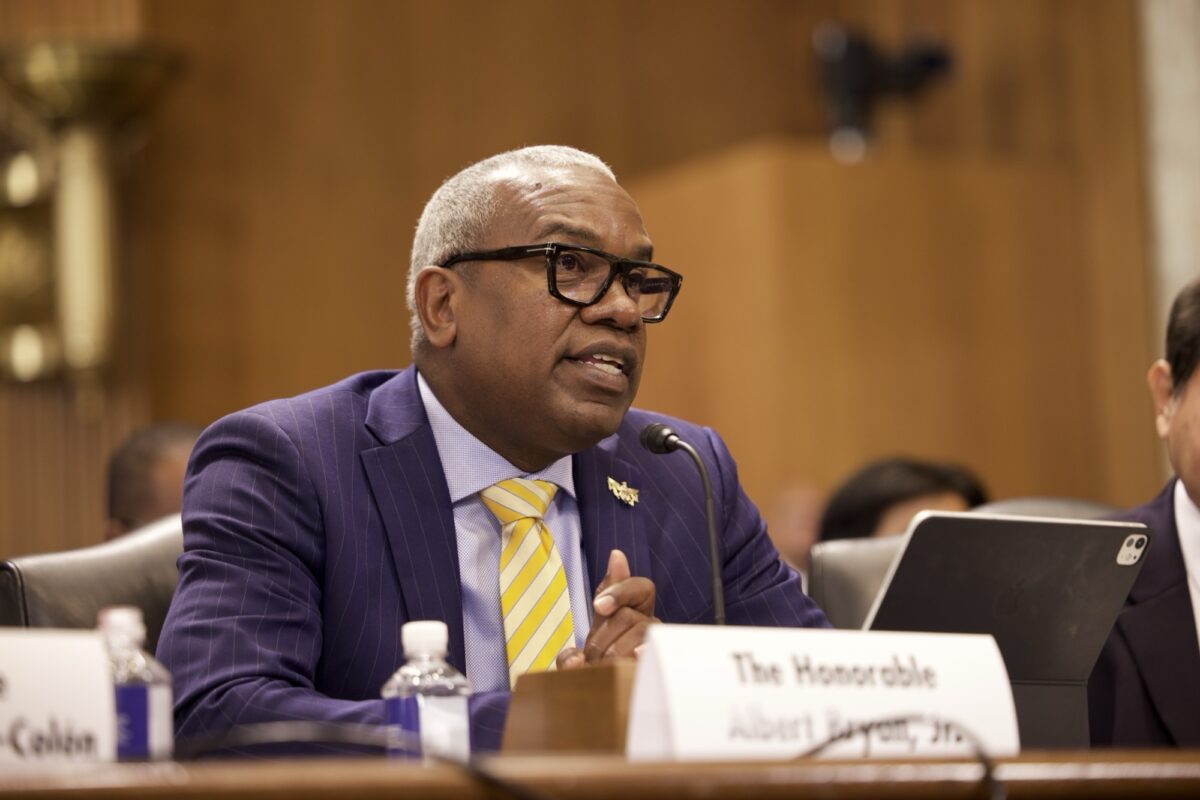
By JOHN McCARTHY / V.I. Free Press News Reporter
WASHINGTON, D.C. — In what has become an annual rite of passage for the executive branch, Governor Albert Bryan Jr. took his seat before the U.S. Senate Committee on Energy and Natural Resources last Wednesday for his eighth and final “State of the Territories” address.
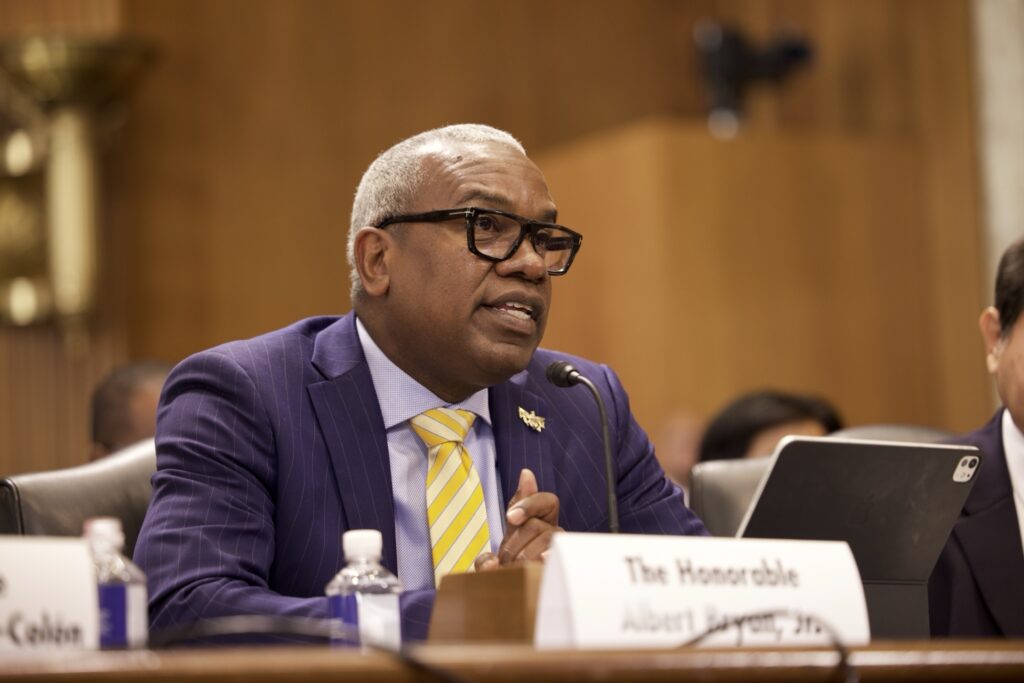
The image released by Government House shows the Governor in his element: testifying at a polished mahogany table in the nation’s capital, microfilmed by congressional cameras, and speaking under the banner of a “stronger, more prosperous Virgin Islands.”
But for investigative journalists and the tax-paying public back home on the ground in the USVI, reading the official Government House press release requires a massive dose of skepticism. Behind the sweeping rhetoric of “eight years of recovery” and “economic progress” lies a masterful exercise in narrative engineering. When you strip away the polished public relations spin authored by Communications Director Richard Motta Jr., the testimony reads less like an aggressive defense of local interests and more like a systematic effort to shift the blame for structural failures from St. Thomas to Washington.
Here is what Government House wanted you to read, juxtaposed with the harsh fiscal reality of the territory as the Bryan administration prepares to hand over the keys.
1. The H-2B Labor Crisis: Rebuilding Delayed, Not Refined
The Government House Narrative: Governor Bryan urged Congress to expand access to the H-2B visa program so the Territory can secure the “electricians, plumbers, carpenters and other skilled workers needed to complete federally funded recovery projects.”
The Reality Check: By framing this as a federal visa bottleneck, the administration completely glosses over why these multi-billion dollar hurricane recovery projects are still lagging nearly nine years after Irma and Maria. The issue isn’t just a lack of foreign labor; it is a staggering local bureaucratic logjam. Local contractors have repeatedly sounded the alarm over the Virgin Islands Office of Disaster Recovery’s (ODR) painfully slow invoice processing cycles and extended payout delays. Skilled mainland and regional workers aren’t skipping the territory because of visa caps alone; they are bypassing local projects because major infrastructure contracts have suffered from stop-and-start financing and erratic local project management.
2. The St. Croix Refinery: A Mirage of Energy Security
The Government House Narrative: The Governor renewed his call for federal support for a “responsible restart of the St. Croix refinery” to strengthen domestic energy security and create industrial jobs.
The Reality Check: Mentioning a “responsible restart” of the massive, troubled industrial footprint on St. Croix’s south shore is pure political theater. The facility has faced an uphill battle against rigorous EPA oversight, environmental degradation lawsuits, and a lack of viable commercial buyers with the capital required to meet stringent modern emissions standards. While the Governor pitches the refinery to Washington senators as a solution to “America’s energy security,” residents downwind on St. Croix remember it for different reasons—including air quality violations and oil spray incidents. Pretending that a global tech icon like Elon Musk is about to sweep in, acquire the property, and convert it into a sustainable rocket-fuel synthesis plant for Mars logistics is the stuff of science fiction. The reality is that the refinery remains an environmental and financial stalemate, not a turnkey economic engine.
3. The Healthcare Pivot: TEFRA and Medicaid Caps
The Government House Narrative: Bryan made an impassioned case for healthcare equity, demanding the elimination of the federal Medicaid funding cap and the modernization of the outdated TEFRA hospital reimbursement system.
The Reality Check: While Governor Bryan is entirely correct that the federal funding mechanisms for territorial healthcare are fundamentally inequitable compared to mainland states, using this platform to hammer the federal government acts as a convenient shield against local healthcare mismanagement. The structural crisis facing the Governor Juan F. Luis Hospital (JFL) on St. Croix and the Schneider Regional Medical Center on St. Thomas cannot be solved solely by changing the federal reimbursement structure. Both institutions have struggled with systemic local issues, including severe nursing shortages, delayed transitions to permanent facility infrastructure, and compounding debt. Demanding federal equity plays well to a national committee, but it ignores the local operational inefficiencies that have plagued the territory’s medical ecosystem for a decade.
4. The Rum Cover-Over and the Deficit Illusion
The Government House Narrative: The Governor pointed to the “permanent extension of the rum cover-over rate as proof of what sustained advocacy… can accomplish,” claiming it provided long-term certainty to support pension stability and reduce debt.
The Reality Check: Celebrating the rum cover-over rate extension as a definitive cure-all for the territory’s debt profile is deeply misleading. While the cover-over revenues are critical to backing the bond tracking systems that saved the Government Employees’ Retirement System (GERS) from total collapse, the territory’s broader debt metrics remain highly vulnerable. Local revenues are heavily leveraged, and basic public services—from road maintenance to public safety infrastructure—remain severely underfunded. Presenting the territory as an increasingly capable asset that has transcended past structural deficits ignores the cash-flow anxieties regularly felt by local vendors and government employees waiting on standard reimbursements.
The Verdict
“The people of the Virgin Islands are not asking for special treatment,” Governor Bryan told the Senate Committee.
But by spending his final appearance focused almost exclusively on a wish list of federal regulatory rollbacks, visa expansions, and tax code revisions, the administration effectively attempted to absolute itself of the domestic execution gap.
For eight years, the narrative from Government House has been one of impending prosperity just over the horizon. As this final term winds down, the data shows that while the territory has indeed endured, the “clear path toward long-term growth” remains obscured by the exact same local operational hurdles that no trip to Washington can fix.