 John McCarthy
By JOHN McCARTHY / V.I. Free Press News Reporter
ST. CROIX — Territorial health advocates are urging residents to exercise extreme caution when handling imported fresh produce as a major outbreak of Cyclospora cayetanensis—a microscopic, diarrhea-causing parasite—surges across the United States.
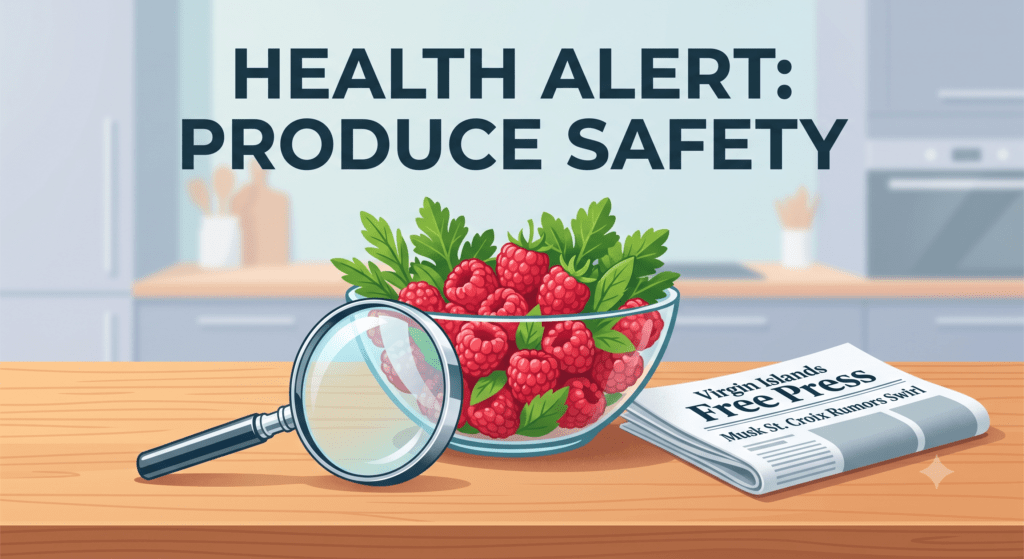
As of mid-July 2026, the Centers for Disease Control and Prevention (CDC) and state health departments have identified thousands of confirmed and suspected cases spanning at least 31 states. While the federal investigation has not yet pinpointed a single specific agricultural source or supplier, past outbreaks of cyclosporiasis have been heavily linked to imported fresh items, including bagged salad mixes, raspberries, basil, cilantro, snow peas, and green onions.
Because the U.S. Virgin Islands imports nearly all of its commercial produce, local supply chains are directly exposed to the same agricultural distribution networks currently under federal scrutiny.
What is Cyclospora?
Cyclospora is a single-celled parasite that infects the small intestine, typically after a person consumes food or water contaminated with feces. Unlike common bacterial pathogens, Cyclospora does not spread directly from person to person.
Symptoms usually manifest between two days and two weeks following exposure and include:
- Severe, frequent, and sometimes explosive watery diarrhea
- Extreme fatigue and muscle aches
- Abdominal cramps, bloating, and severe gas
- Loss of appetite, nausea, and rapid weight loss
If left untreated, the illness can persist for several weeks or even months, occasionally resolving only to return weeks later.
Why Standard Washing Isn’t Enough
Food safety experts warn that a casual rinse under the kitchen tap is insufficient to dislodge the sticky parasite from delicate or textured produce. The parasite’s microscopic oocysts easily cling to the tiny hairs of raspberries, the crevices of cilantro and basil, and the folds of leafy greens.
Furthermore, standard chemical sanitizers and chlorine treatments do not reliably kill Cyclospora.
How USVI Consumers Can Protect Themselves
In light of the ongoing mainland crisis, health officials recommend local households shift their food preparation habits towards safer, preventative practices:
- Buy Whole, Not Bagged: Opt for whole heads of lettuce or cabbage rather than pre-cut, pre-washed bagged salad kits. Discard the outer two to three layers of leaves entirely before washing the inner leaves.
- Wash with Friction: Wash all fresh produce thoroughly under clean, running tap water while physically rubbing the surfaces. For firm vegetables like cucumbers or melons, scrub vigorously with a clean produce brush.
- Use a Vinegar Soak: For delicate berries and herbs, swishing the produce in a solution of one part white vinegar to three parts clean water has been shown to be more effective than water alone at dislodging contaminants.
- Cook When Possible: The only foolproof method to eliminate the parasite is heat. Cooking vegetables, greens, and herbs to an internal temperature of at least 158°F (70°C) completely destroys Cyclospora.
- Peel Your Fruit: Stick to fruits that can be peeled, such as bananas, to minimize external exposure.
If you or a family member experience persistent, watery gastrointestinal symptoms lasting more than a few days, contact a healthcare provider immediately and specifically request a Cyclospora stool test, as standard bacterial culture tests often fail to detect the parasite.